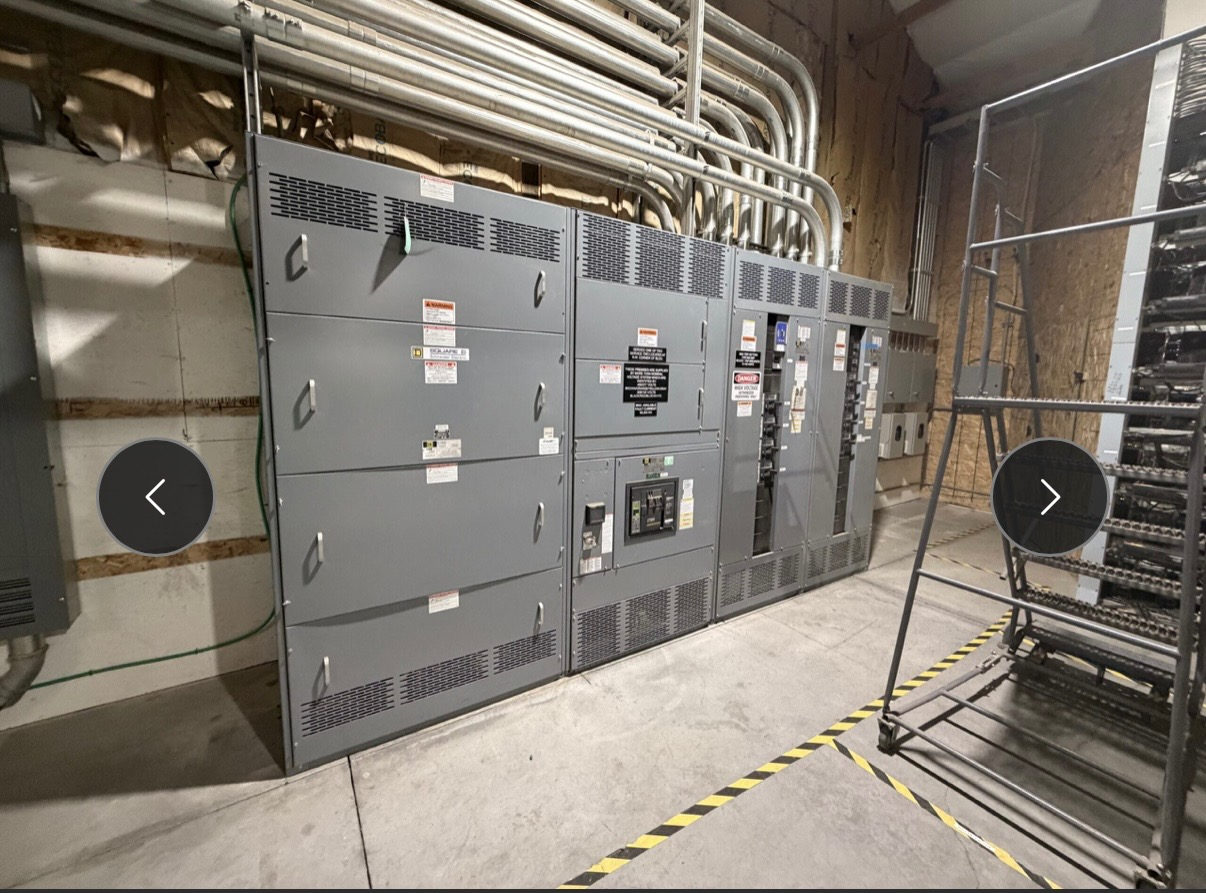
What a Bus Compartment Is
A bus compartment is an enclosed space within electrical equipment that contains bus conductors and their supports. The bus conductors carry power between equipment sections or connect components such as incoming devices, feeders, and distribution assemblies. Supports hold the conductors in their intended position and help maintain the clearances and mechanical arrangement established by the design. The compartment is therefore more than an empty enclosure area: its dimensions and boundaries relate directly to the bus layout and adjacent electrical spaces.
In a new switchgear specification, the phrase bus compartment definition helps clarify which conductors occupy a space and how that space interfaces with the rest of the assembly. It does not, by itself, establish a voltage, current, short-circuit rating, enclosure type, or standard. Those characteristics must be confirmed for the particular equipment and application.
How the Compartment Fits the Assembly
Compartment boundaries and bus routing depend on the equipment architecture. A bus space may extend along an assembly or be arranged in sections, with connections to devices or neighboring compartments defined by the drawings. Barriers, supports, access provisions, and separation from other components are design matters to resolve for the particular assembly; no single arrangement should be assumed from the term alone.
The project team should identify which sections contain bus, where conductors enter or leave, and how the bus connects across section boundaries. Confirm whether the intended scope includes the main bus, connecting bus, or other conductors, and whether incoming and outgoing interfaces are part of the same assembly. These details give the manufacturer a clear basis for developing an arrangement that matches the one-line diagram and equipment lineup.
Inputs That Shape Bus Design
Electrical and physical inputs determine whether a proposed bus compartment suits the project. Provide the system voltage, required continuous current, available fault information and specified withstand requirements, along with the one-line diagram and equipment arrangement. These values are project-specific and must be evaluated together; an acceptable rating cannot be inferred from the compartment name or from another installation. Qualified electrical professionals should establish the design basis and confirm applicable requirements with relevant authorities.
Physical information matters as well. Identify the number and sequence of sections, conductor entry and exit directions, connection points, room constraints, and any cable or conduit interfaces that affect layout. For a project in Austin or elsewhere in Central Texas, communicate site access, delivery constraints, and coordination milestones early. Such information supports planning; it does not imply a local facility or installation service.
Construction Choices and Interfaces
Bus compartment construction involves choices about conductor material and arrangement, support locations, clearances, barriers, and access. The selection must be consistent with the electrical design, mechanical needs, surrounding equipment, and the intended operating environment. Enclosure construction and compartment access should be reviewed as part of the complete assembly rather than chosen in isolation. The project specification should describe required functions and interfaces while leaving detailed dimensions and ratings for engineering review.
Document connections to circuit breakers, switches, cable compartments, adjacent sections, and external buswork as applicable. Confirm phase arrangement, neutral or grounding provisions where required by the design, and connection dimensions with the equipment drawings. A manufacturer can build custom assemblies to specification, but the design basis and all interfaces need review before release. Applicable standards and any UL 891 suitability depend on the assembly and project; neither should be presumed for every type of switchgear.
Review, Testing, and Release
Before construction, compare the bus compartment arrangement against the one-line diagram, equipment schedule, interface drawings, and project requirements. Resolve discrepancies in section boundaries, conductor routing, access, and connections before approving final drawings. The review should include qualified electrical professionals and, where applicable, the authorities responsible for the project. This step helps ensure that the compartment is considered as part of a complete assembly, not as a standalone description detached from system requirements.
Ask which inspections or tests are included for the specified assembly and what documentation will be supplied; do not assume a test scope or listing from the glossary term. Test methods and applicable standards depend on equipment design and project requirements. Confirm acceptance criteria, drawing revisions, and required records before procurement is finalized. Manufacturing in the USA with all-American components is an available supplier characteristic, while lead time remains subject to the project’s scope and review.
Practical Specification and Procurement Steps
To request new switchgear, provide the one-line diagram, electrical design basis, section lineup, connection interfaces, room or site constraints, and project schedule. Mark the bus compartments on drawings or schedules and state what each space must contain and connect to. Identify unresolved items rather than guessing at ratings or dimensions. A complete initial package helps the manufacturer assess custom assembly requirements, clarify exclusions, and identify engineering questions before a purchase decision.
For a Central Texas project, coordinate delivery planning with the site team, including access, receiving arrangements, and the sequence for equipment needed on site. Ask for a project-specific lead-time estimate after scope review, and confirm drawing approval milestones and required submittals. Before release, verify that the proposed compartment arrangement, ratings, interfaces, and applicable compliance requirements match the approved project documents. This gives procurement a concrete checklist while keeping final decisions tied to the actual installation.
Project specification checklist
Use this checklist to organize the details for a project-specific review. Final ratings, applicable standards and equipment selections depend on the approved design.
| Item | What to confirm |
|---|---|
| Electrical design basis | Confirm system voltage, continuous current, fault information, and required withstand criteria for the specific assembly. |
| Compartment scope | Identify bus conductors included, section boundaries, and connections to devices or adjacent sections. |
| Physical interfaces | Provide conductor entry and exit directions, connection points, lineup dimensions, and site constraints. |
| Construction requirements | Review conductor arrangement, supports, clearances, barriers, access, and enclosure design against project needs. |
| Compliance and verification | Confirm applicable standards, any UL 891 suitability, testing scope, and documentation for the specific assembly. |
| Procurement coordination | Resolve drawing approvals, delivery constraints, required submittals, and project-dependent lead time before release. |