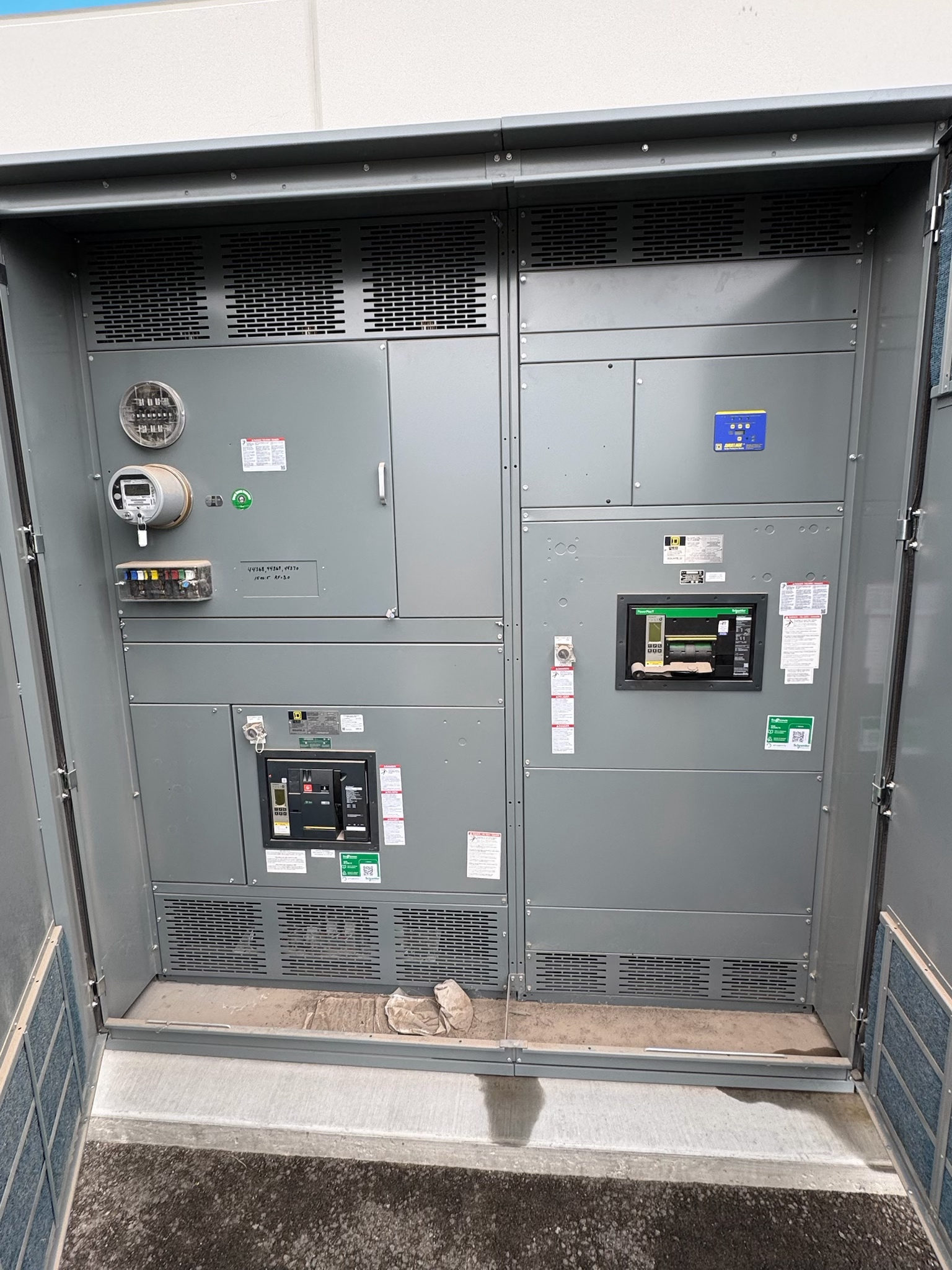
Shipping split definition for new switchgear
A shipping split is a planned division of a switchgear lineup or enclosure into separate sections for transportation, followed by connection or assembly at the destination. It addresses the practical difference between the dimensions and weight of an assembled lineup and the limits of the route, building access, and handling equipment. The split is a design and logistics decision—not simply a cut made after manufacturing. Its location affects enclosure construction, internal connections, installation sequence, and what must be completed or checked at the site.
For a project team, the term is useful early in layout and procurement discussions. A proposed split should be understood in relation to the complete equipment arrangement, not treated as a universal module size. The manufacturer and qualified electrical professionals need to review the project drawings, specifications, transport plan, and installation conditions together. Actual section dimensions, weights, and connection details depend on the design and must be confirmed for the specific new switchgear order.
Why the division matters from factory to destination
Dividing equipment for transportation can make a lineup manageable within a route or building that cannot accept one assembled enclosure. Potential constraints include freight vehicle limits, turning or overhead clearances, loading and unloading arrangements, doorway dimensions, corridors, elevators, and the path from receiving point to final location. Those conditions may differ between the project site and the freight route, so a building opening alone does not establish that a section can be delivered safely.
A split also creates work at the destination. Sections may need to be positioned in a defined sequence, aligned, joined, and electrically connected in accordance with the approved design and manufacturer instructions. Access for tools and personnel, floor conditions, staging space, and protection from moisture or debris can affect the plan. Do not assume field assembly, lifting, rigging, or installation service is included; scope and responsibility should be documented in the project agreement.
Inputs that shape split location and section size
Useful inputs include the approved one-line diagram, lineup elevation, equipment schedule, room layout, and any project requirements for bus arrangement, cable entry, and adjacent equipment. Provide known route restrictions and the receiving and final-placement paths, including measured openings and clearances. Where available, the project team should also identify transportation limits, unloading method, staging area, and handling equipment assumptions. These are inputs for review, not grounds to infer a suitable section size without design confirmation.
The electrical arrangement matters as much as the transport envelope. A split may intersect bus, control wiring, barriers, grounding paths, or enclosure features, so its position must be coordinated with the actual assembly design. Required voltage, current, interrupting or withstand characteristics, environmental conditions, and applicable standards should be specified for the project; none can be assumed from the shipping split itself. Qualified electrical professionals and relevant authorities must review the complete design and its requirements.
Interfaces, joints, and field assembly decisions
The split creates mechanical and electrical interfaces that need clear definition. Project documents should identify how adjoining sections are aligned and secured, how bus or other conductors are joined, how grounding continuity is maintained, and how control or communication connections are handled. Enclosure joints, barriers, labeling, and any required sealing also warrant review. Exact construction and connection methods are equipment-specific; a glossary definition does not establish that a particular joint arrangement is available or acceptable for every design.
Before release, agree who receives each section, who controls storage and movement, and who performs assembly and inspection. Confirm the required sequence, tools or materials specified by the manufacturer, access for joining work, and the point at which the assembled lineup will be ready for applicable checks. Work on electrical equipment should be performed only under appropriate procedures by qualified personnel; this article is not a field-assembly instruction. Responsibilities and acceptance criteria belong in the project documents.
Testing, documentation, and coordination
A transportation division can affect factory and site quality processes. Discuss how the equipment will be configured for factory inspection or testing, what is documented before shipment, and which checks are required after the sections are joined. The applicable testing and acceptance process depends on the equipment design, project specification, and relevant standards. Do not assume that a particular listing, test scope, or standard applies to every assembly. UL 891 may apply to suitable switchboard assemblies, but it does not automatically apply to all switchgear or to every shipping configuration.
Coordinate the split drawings with the shipping and installation plan before manufacture. Confirm section identification, connection documentation, handling information, and any drawings or instructions needed by the receiving team. If the design is a UL 891 assembly, ask how the proposed arrangement and field joining relate to the applicable assembly requirements and documentation. Final decisions should be reviewed by the manufacturer, qualified electrical professionals, and relevant authorities, with the agreed records included in project turnover.
Practical steps before ordering
Start by sending the equipment specification and current layout together with measured transport and access constraints. Ask for a proposed split arrangement showing section boundaries, overall dimensions and weights for each shipping section, interface details, connection responsibilities, and any assumptions requiring confirmation. Review those details against the actual route from shipment receipt to final placement, not only the room plan. Resolve changes to doors, staging, sequencing, or handling before approving the design or procurement documents.
Then document the selected arrangement, required standards and ratings, inspection and testing responsibilities, shipping coordination, and field assembly scope in the order package. Confirm that revisions to the electrical design or site access will trigger a coordinated review, since either can change the split plan. A US manufacturer of new switchgear can assess custom assemblies to specification and nationwide shipping, but feasibility and lead time depend on project review. A complete, consistent information package helps teams identify constraints before production and avoid preventable delivery or assembly conflicts.
Project specification checklist
Use this checklist to organize the details for a project-specific review. Final ratings, applicable standards and equipment selections depend on the approved design.
| Item | What to confirm |
|---|---|
| Transport envelope | Confirm route restrictions, vehicle limits, clearances, receiving access, and final-placement path. |
| Section dimensions and weights | Request design-specific dimensions and weights for each proposed shipping section; do not assume standard module sizes. |
| Electrical and mechanical interfaces | Document bus, grounding, control, enclosure-joint, and alignment interfaces, plus connection responsibilities. |
| Assembly scope | Agree who handles receiving, storage, movement, field joining, inspection, and applicable post-assembly checks. |
| Applicable requirements | Identify project ratings, standards, listings, and acceptance criteria for review against the specific equipment design. |