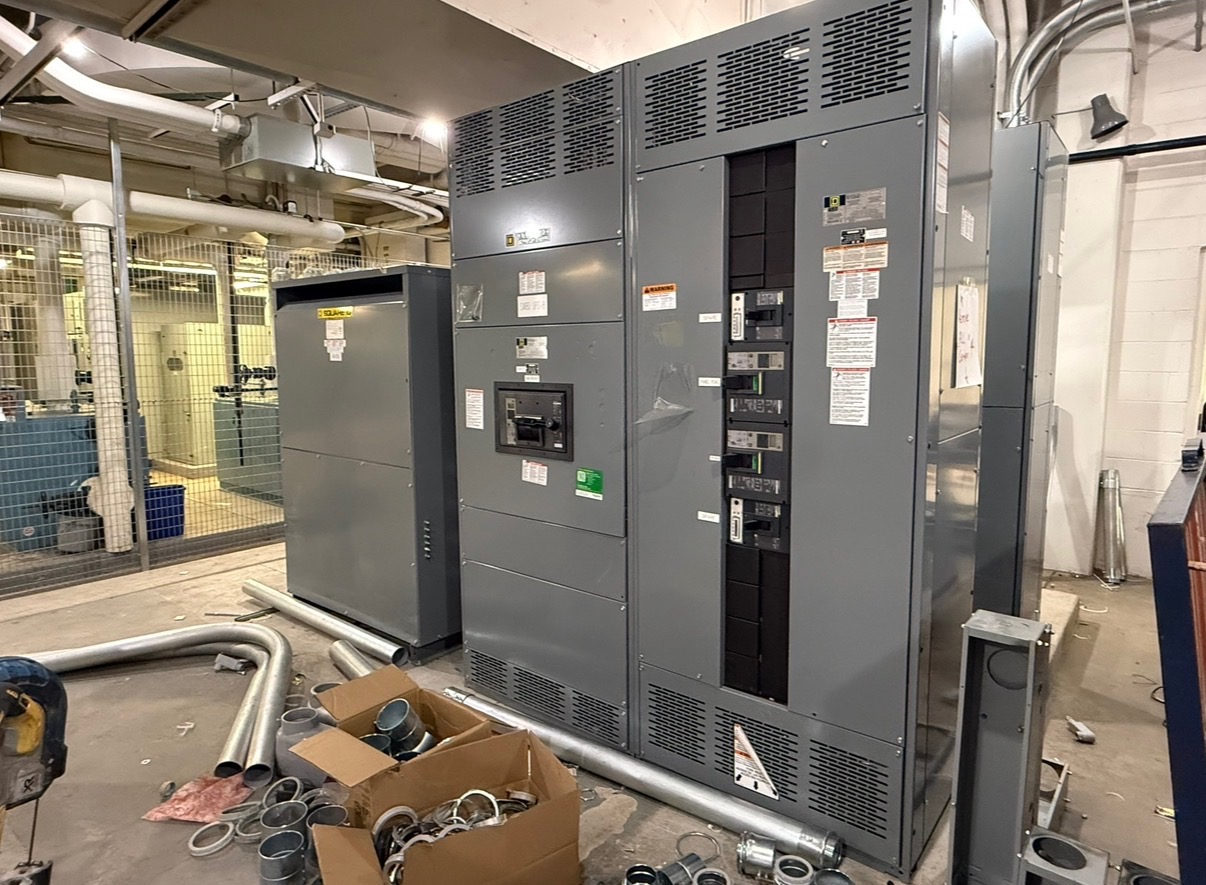
Phase the Upgrade Around Campus Use
Campus electrical upgrade phasing starts with the academic calendar and the loads that cannot tolerate an unplanned interruption. Classroom schedules, residence occupancy, research activity, clinical or public-facing functions, and major campus events can all affect when an outage is workable. Map those operating constraints before fixing a construction sequence; a break period may offer access, but it does not automatically provide enough time for every cutover and verification task.
A useful phasing plan identifies which buildings or distribution areas can be addressed independently and which depend on shared electrical infrastructure. It should distinguish equipment delivery and preparation from the outage itself, then reserve time for inspection, testing, and an agreed return-to-service decision. New switchgear can be designed to the project’s requirements, but the sequence and permissible interruption must be established with campus stakeholders and qualified electrical professionals.
Build the Design Basis From Campus Records
Start with available one-line diagrams, load information, existing equipment documentation, fault-current and coordination studies, and records of later changes. Confirm what is known, what is outdated, and what must be field-verified by the project team. The design basis should identify the intended system function, connected loads, operating conditions, maintainability needs, and the consequences of losing each affected distribution path.
For university switchgear, selection is not a matter of choosing a nominal rating in isolation. Voltage, continuous current, short-circuit withstand or interrupting requirements, bus arrangement, protective-device coordination, metering, control interfaces, and enclosure conditions must be checked for the specific application. Applicable standards and any listing requirements depend on equipment design and project scope. UL 891 may apply to suitable switchboard assemblies; it should not be presumed applicable to every switchgear type.
Choose Boundaries and Temporary Arrangements Carefully
Define each phase by a clear electrical boundary: the equipment being replaced, upstream and downstream connections, affected panels or feeders, and the loads that remain in service. Identify tie points, alternate sources, and transfer arrangements only where the existing system and engineered design support them. Temporary power may be considered, but its capacity, protection, grounding, placement, monitoring, and operating responsibility require project-specific review rather than assumption.
Decisions about sequencing can change the new equipment design. For example, a planned split between phases may influence section arrangement, feeder allocation, control wiring, metering, and future expansion provisions. Record which functions must be available at each stage and who authorizes switching or transfer actions. Any temporary or permanent configuration should be reviewed by qualified electrical professionals and relevant authorities, with no work approach relying on unverified system conditions.
Coordinate Interfaces Before Equipment Is Released
Campus projects often connect switchgear with existing transformers, generators, automatic transfer equipment, protective relays, building controls, metering systems, and utility or campus distribution interfaces. Create an interface register showing the responsible party, required information, drawing status, and decision date for each connection. Confirm available space, access routes, cable entry, conduit locations, grounding, control power, and physical constraints from project documentation and appropriate site verification.
Resolve interface questions before approving equipment details for production. Changes to feeder counts, device functions, termination arrangements, or control schemes can affect both the assembly and the outage plan. Provide the manufacturer with the reviewed specifications, drawings, applicable study results, and required submittal information. Custom assemblies can be built to specification, but each requested feature and its compatibility with the overall system must be confirmed for the project.
Align Procurement With the Outage Plan
Work backward from the approved cutover window to set design review, submittal, release, manufacturing, shipment, receiving, and preparation milestones. Lead time is project-dependent, so confirm the schedule against the actual scope and required approvals rather than assuming equipment will arrive by a preferred academic break. New switchgear is built in the USA using all-American components, and shipment can be arranged nationwide; confirm shipping details and receiving constraints for the campus project.
Before release, reconcile the equipment scope with the phasing drawings and confirm that required accessories, protection functions, labels, documentation, and connection details are included. Check who will receive and inspect the shipment, where it can be stored, and how it will reach the installation location. These logistics matter when campus access, loading areas, storage, or building routes are restricted. Resolve schedule risks early and document decisions that could shift the outage window.
Make Readiness and Return-to-Service Explicit
For each phase, define prerequisites for the outage, installation, inspection, testing, and energization decision. The project team should establish responsibility for shutdown authorization, isolation and verification, connection checks, protection settings, functional tests, and communication with affected departments. Test scope should reflect the new equipment, connected systems, project specifications, and applicable requirements; no particular test or standard should be presumed suitable for every assembly.
Before setting a cutover date, use a readiness review to confirm approved drawings, equipment receipt and inspection, access, qualified personnel, interface availability, contingency arrangements, and stakeholder notification. Agree on what conditions permit the next phase and what would trigger a pause or reschedule. After each stage, record test results, settings, outstanding items, and updated system documents. This evidence supports a controlled handoff and gives campus planners a dependable basis for scheduling the remaining work.
Project specification checklist
Use this checklist to organize the details for a project-specific review. Final ratings, applicable standards and equipment selections depend on the approved design.
| Item | What to confirm |
|---|---|
| Academic constraints | Confirm calendar-sensitive periods, affected departments, critical loads, and acceptable interruption windows. |
| System basis | Verify current one-lines, load data, fault and coordination information, and field conditions. |
| Phase boundaries | Document equipment limits, feeders, interfaces, required service continuity, and any engineered temporary arrangement. |
| Equipment requirements | Confirm application-specific voltage, current, fault-duty, protection, control, enclosure, and applicable standard requirements. |
| Procurement and logistics | Validate submittal decisions, project-dependent lead time, receiving, storage, access, and shipment coordination. |
| Testing and authorization | Define responsible parties, inspection and test scope, switching authorization, acceptance criteria, and records. |