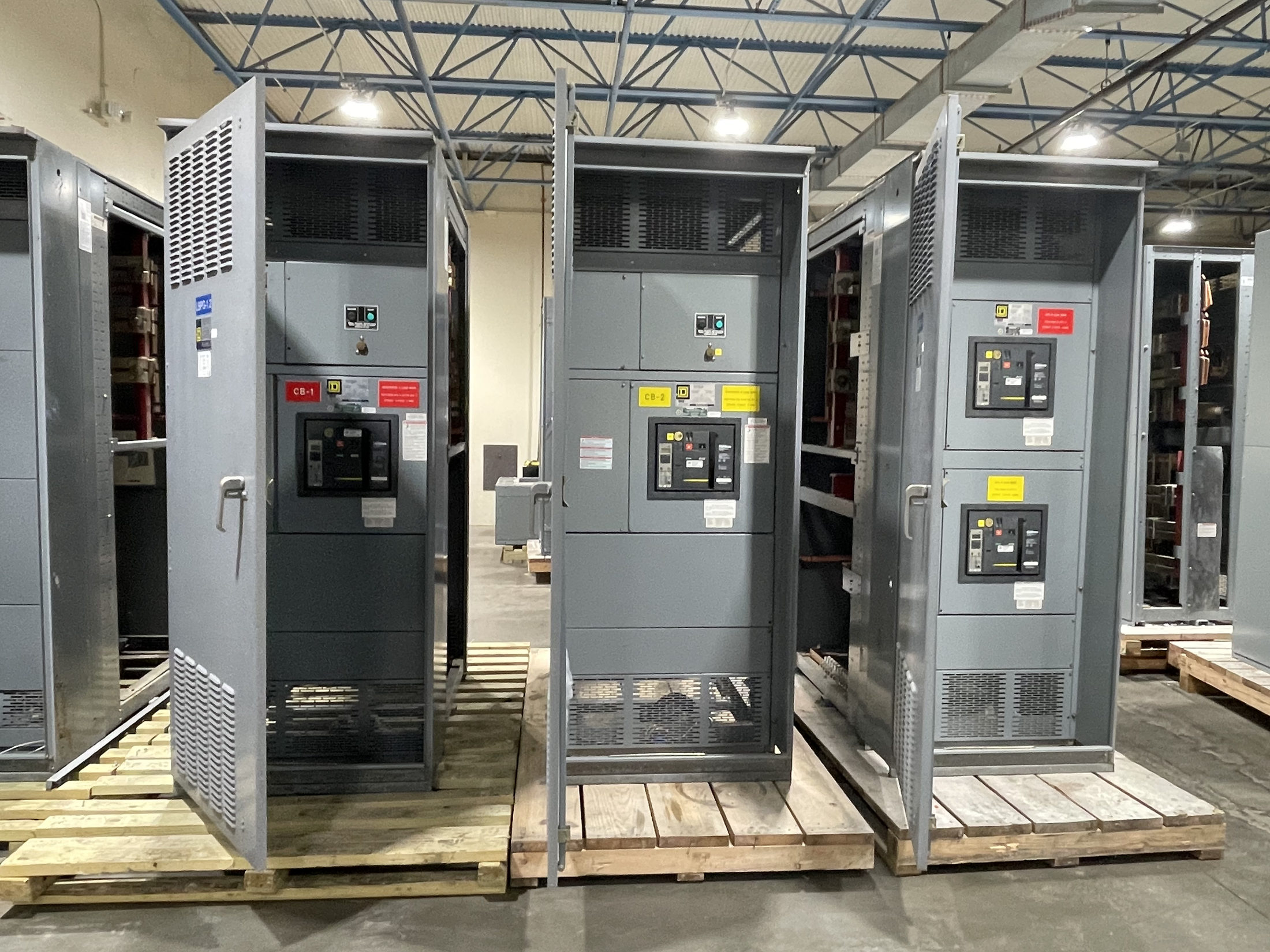
Start With the Electrical Application
To buy and specify new switchgear, begin with what the equipment must do in your facility—not a catalog description alone. Identify whether the project calls for a switchboard, low-voltage switchgear, or another assembly, and describe its role in the distribution system. Relevant details include the source and downstream loads, how the equipment will be operated, and whether future expansion or alternate sources must be accommodated. A qualified electrical professional should establish the design basis and confirm the applicable codes, standards, and authority requirements.
For a Central Texas project, gather the one-line diagram, load information, site constraints, and project schedule before requesting pricing. If documents are preliminary, label assumptions and open questions so suppliers can distinguish a budgetary quotation from a proposal based on a settled scope.
Define Ratings and Configuration for the Project
Voltage, continuous current, and short-circuit requirements must be selected for the specific system and verified against its design—not chosen from a generic range. The specification should also identify the required number and arrangement of incoming and outgoing circuits, metering or protective devices, control needs, and any planned tie or transfer functions. State the intended installation environment and enclosure requirements, then have the responsible electrical professionals confirm suitability.
These details affect the assembly, footprint, interfaces, and quotation. A supplier may need drawings, equipment schedules, or clarification of the available fault-current information to develop a technically meaningful proposal. Do not assume a rating, enclosure, or listing is suitable until it is confirmed for the complete design and project conditions.
Compare Suppliers by Scope, Not Just Price
When deciding where to buy new switchgear, compare what each quotation actually includes. Check the proposed equipment type, design assumptions, component and assembly scope, drawings, documentation, testing, and any exclusions. Ask how deviations from the specification will be identified and resolved. A lower initial figure may represent a different configuration or leave important coordination work outside the quoted scope, so request a clear, comparable basis before evaluating cost.
For a US project, customers can consider a manufacturer that builds in the USA with all-American components and can supply custom assemblies to specification. Confirm that the supplier can review the project documents, explain design choices, and state which applicable standards and listings apply to the particular assembly. UL 891 may apply to suitable switchboards; it should not be assumed for every switchgear product.
Request a Quote With Clear Assumptions
A useful request for quotation includes the one-line diagram, equipment schedule, written technical specification, site and interface information, and the date equipment is needed. Include the required delivery location and identify who will review drawings and respond to technical questions. If the project has alternates, such as optional metering or spare provisions, list them separately so the base proposal remains easy to compare.
Ask the manufacturer to identify the proposed scope, exceptions, information still needed, drawing and approval milestones, testing provisions, and the current estimated lead time. Lead time depends on project requirements and should be confirmed with the quotation and again as the design is finalized. Resolve open technical items in writing before treating the proposal as a firm basis for procurement.
Coordinate Design Review, Testing, and Interfaces
Before release for production, qualified project reviewers should check drawings against the approved one-line, circuit schedule, physical constraints, cable entry and termination needs, and connections to adjacent equipment. Confirm responsibility for protection and control interfaces, metering details, labels, and any required project documentation. Changes after approval can affect design, price, and schedule, so distribute comments through an agreed review process and document accepted revisions.
Clarify what factory inspection or testing is included, what records will be provided, and whether any customer or third-party review must be scheduled. Test scope depends on the equipment design and contract; it does not replace field acceptance or installation checks. Applicable standards and authority requirements must be determined for the specific assembly and project, rather than presumed from a general product description.
Plan Delivery and Make the Next Step Actionable
Delivery planning is part of specifying the equipment. Confirm the destination, receiving hours and access constraints, unloading responsibility, packaging expectations, and the route from the receiving point to the installation area. Coordinate the requested ship date with construction sequencing and site readiness. A manufacturer able to ship nationwide can support projects in Austin and elsewhere in Central Texas, but the delivery plan and timing still need project-specific confirmation.
To move from inquiry to an actionable quotation, assemble the latest drawings and specification, name the technical decision-maker, list unresolved choices, and state the required on-site date. Ask for a written proposal that separates included scope, options, assumptions, exceptions, testing, and estimated lead time. Have the responsible electrical professionals and relevant authorities review the final design before purchase and release; this keeps procurement aligned with the intended system.
Project specification checklist
Use this checklist to organize the details for a project-specific review. Final ratings, applicable standards and equipment selections depend on the approved design.
| Item | What to confirm |
|---|---|
| System and application | Confirm equipment type, system role, source arrangement, and downstream circuits from project documents. |
| Electrical ratings | Have qualified professionals establish voltage, current, and short-circuit requirements for the specific system. |
| Configuration and environment | Specify circuit arrangement, controls, metering, enclosure, installation conditions, and interfaces. |
| Standards and testing | Confirm applicable standards, any assembly-specific listing, inspection scope, and documentation. |
| Quotation and schedule | Request scope, exceptions, drawing milestones, testing provisions, and project-dependent estimated lead time. |
| Delivery coordination | Confirm destination, access, receiving and unloading responsibilities, and site readiness. |