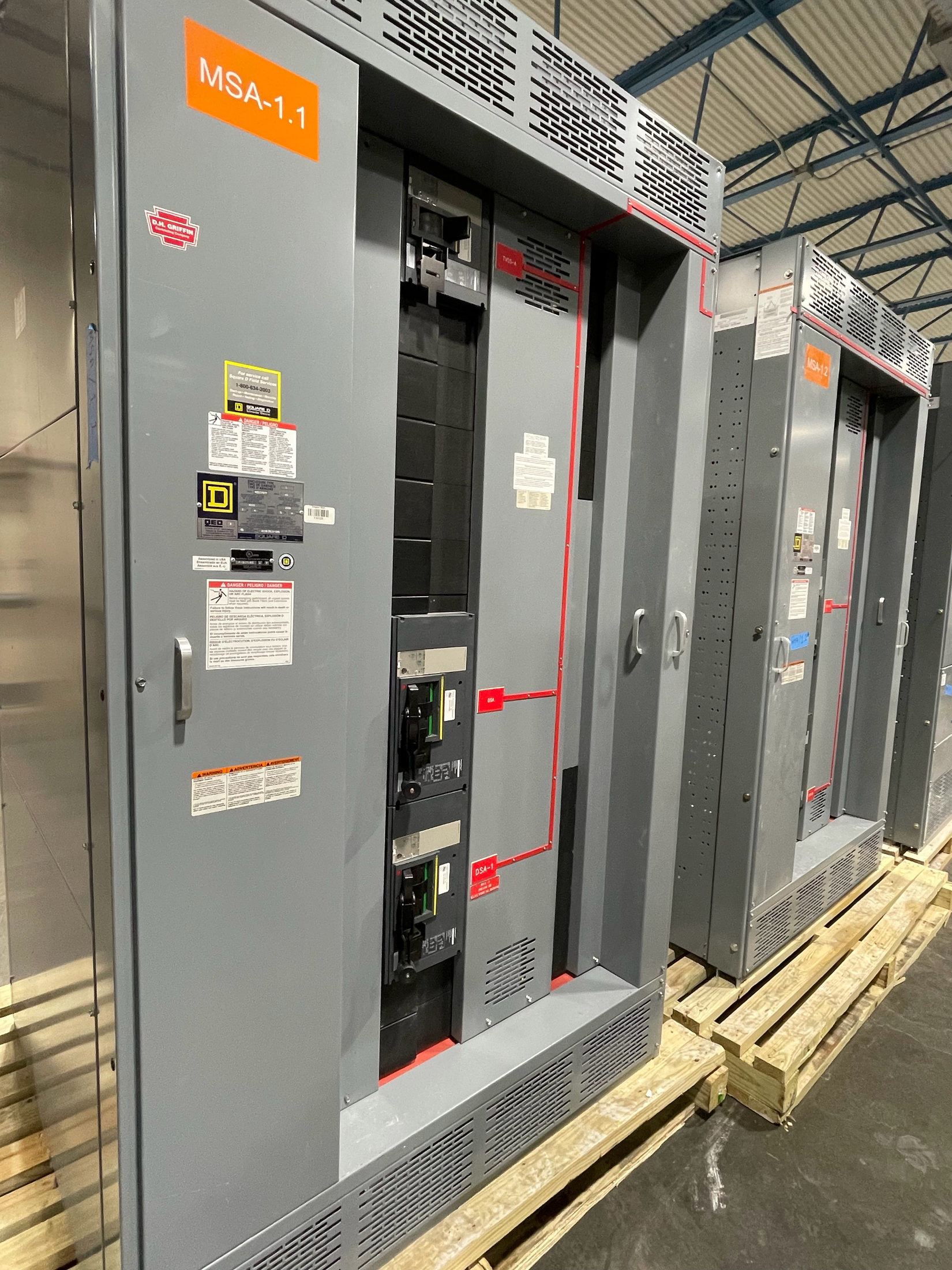
Planning New Switchgear for Georgetown Facilities
For Georgetown facility owners planning an expansion, replacing aging distribution equipment, or developing a new electrical area, the right switchgear begins with the project’s operating needs—not a presumed standard configuration. Describe what the equipment will serve, what is changing, and whether existing distribution must remain in operation during construction. For industrial expansions, include the expected load growth and identify new production areas, building additions, or major electrical loads that affect the distribution plan.
A new switchgear inquiry can cover custom assemblies built to the project specification, with equipment manufactured in the USA using all-American components. Georgetown projects are coordinated from Central Texas with shipping arrangements determined by the equipment and schedule; this does not imply a local office or stock. Share the project location, decision timeline, and desired delivery window so the manufacturer can assess the request without assuming site services or a guaranteed lead time.
Describe Load Growth and Existing Distribution
A useful quote request explains both present conditions and the intended future state. Provide available one-line diagrams, load schedules, and equipment schedules, noting which documents are current and which are preliminary. Identify planned load additions, anticipated operating patterns, and any provisions the design team is considering for later expansion. These details help determine whether the project calls for a switchboard or another type of switchgear and which arrangement merits review.
Include existing source and distribution information where available, such as service configuration, feeder destinations, and interfaces with transformers or downstream equipment. Do not assume an existing rating or spare capacity will suit the expansion; qualified electrical professionals must evaluate system conditions and project requirements. If records are incomplete, say so and list what remains to be verified. Clear distinctions between confirmed data, design assumptions, and open questions reduce avoidable quote revisions.
Resolve Layout, Access, and Installation Interfaces
Equipment layout can shape the assembly design as much as the electrical one-line. Share the intended room or outdoor location, available footprint, access route, and any known constraints involving doors, structural openings, overhead clearance, or adjacent equipment. Provide drawings with dimensions when possible, and identify which dimensions have been field-verified. For an industrial expansion, show how new equipment relates to existing lineups and the areas where feeders must connect or exit.
Discuss cable entry and exit direction, cable or bus connections, termination space, and access needed for inspection and maintenance with the project’s electrical designer. The enclosure and environmental requirements must be chosen for the actual installation conditions, not inferred from location alone. Confirm who is responsible for final site measurements, foundations or supports, routing, and installation coordination. Early review of these interfaces helps establish a buildable design before details become difficult to change.
Choose Ratings and Standards by Project Review
Voltage, continuous current, short-circuit withstand or interrupting requirements, and protective-device arrangements must be established for the specific system and application. They are not interchangeable options or universal capabilities. Provide the project specifications and available fault-current or coordination information, while identifying values that still require engineering confirmation. The responsible electrical professionals should review the proposed design against system conditions, applicable codes, and the requirements of relevant authorities.
Standards and listing expectations depend on equipment type and design. UL 891 applies to suitable switchboard assemblies; it should not be assumed for every switchgear product or treated as a general medium-voltage or high-voltage designation. State whether the project requires a particular standard, listing, or documentation package, and ask for confirmation that it applies to the proposed assembly. Final selection and approval remain subject to qualified review and the authorities responsible for the project.
Plan Phasing, Coordination, and Verification
When Georgetown expansion work must proceed in phases, describe the sequence: what must be energized first, which existing areas need to remain in service, and when new loads are expected to connect. Note planned outage windows or operating restrictions without assuming that a particular cutover method is feasible. The design team can use this information to evaluate lineup arrangement, interfaces, and procurement milestones. Any work affecting energized systems requires planning and execution by qualified personnel under applicable safety requirements; do not treat phasing as permission to work live.
Before release for manufacture, review drawings, device and feeder schedules, connection details, and interface responsibilities with the project team. Establish what inspection or testing documentation is required and who will review it. Factory checks and acceptance expectations should be defined for the specific assembly and contract, rather than presumed. Coordinate shipment timing with site readiness, receiving access, and the construction sequence; lead times depend on the final design and project conditions.
Prepare a Georgetown Quote Request
To start a useful inquiry, assemble the project location, equipment type if known, one-line diagram, load information, preliminary layout, specification, and target milestones. Mark each item as approved, preliminary, or pending. For an industrial facility expansion, add a concise phasing narrative and explain how load growth affects the existing distribution plan. If drawings are not yet available, send a written scope describing the source, served areas, anticipated changes, and constraints that need engineering review.
Ask the manufacturer to identify information gaps, confirm which assembly standards may apply, and outline the design details needed before a firm proposal can be prepared. Include the desired shipment window, delivery-site constraints, and the person coordinating technical questions. Custom equipment can be developed to specification and shipped nationwide, but schedule, configuration, and applicable approvals must be confirmed for the individual project. A complete inquiry gives the Georgetown project team a practical basis for comparing design options and planning procurement.
Project specification checklist
Use this checklist to organize the details for a project-specific review. Final ratings, applicable standards and equipment selections depend on the approved design.
| Item | What to confirm |
|---|---|
| Project scope | Identify new construction, replacement, or expansion and the equipment functions to be served. |
| Load and source data | Provide verified system information, load schedules, planned growth, and clearly marked assumptions. |
| Layout and interfaces | Confirm dimensions, access, connection directions, feeder destinations, and installation responsibilities. |
| Ratings and standards | Have qualified professionals establish project-specific electrical requirements and applicable standards. |
| Phasing and schedule | Describe operating constraints, sequence, target milestones, and site readiness for shipment. |