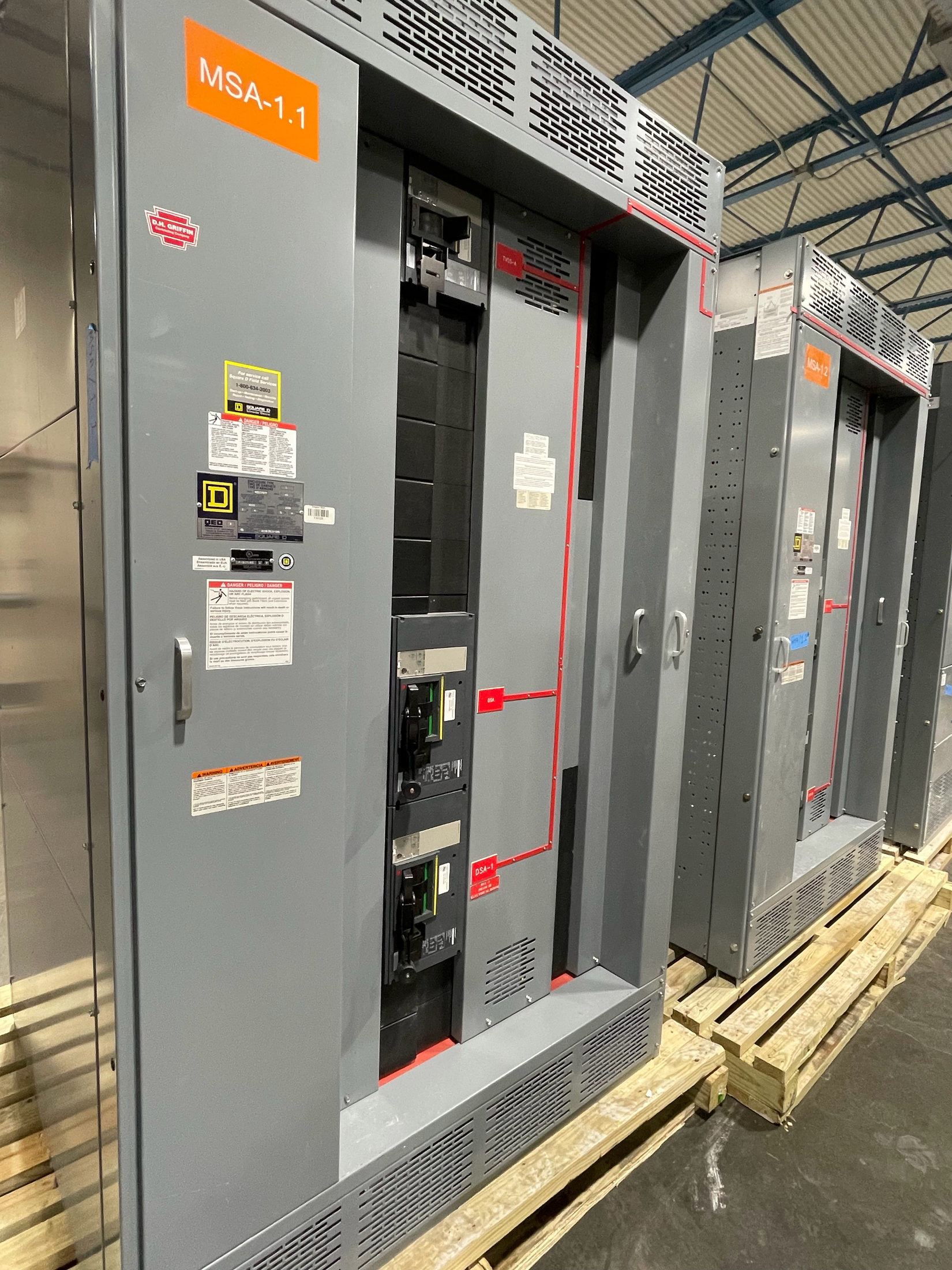
Plan switchgear around the Marble Falls water system
For a Marble Falls-area water or wastewater project, switchgear decisions should start with what the facility must keep operating—not a presumed standard lineup. Identify whether the equipment serves treatment processes, well or lift-station pumps, plant distribution, or another load group. Note which loads are essential, which may run together, and what operating conditions require an orderly shutdown or restart. This gives the design team a useful basis for defining feeder arrangement, motor-control interfaces, and any separation between normal and standby sources.
A preliminary inquiry can describe the facility type, project stage, and whether the request is for replacement, expansion, or a new installation. Include available one-line diagrams and specifications when possible, while marking outdated or unverified documents. A qualified electrical professional should review system requirements and applicable codes with the relevant authorities; a location alone does not establish a suitable design or rating.
Describe pump motors and operating sequences
Pump loads can shape equipment selection in ways that a general load total will not capture. For each motor, provide the nameplate information available, starting method, expected operating sequence, and whether pumps can operate simultaneously. Identify variable-frequency drives, soft starters, bypass arrangements, or other controls that affect the electrical interface. Also note planned motor additions and any process requirement for duty/standby operation. These details help determine the needed feeder functions and coordination boundaries without assuming a particular amperage or short-circuit rating.
Clarify which controls are part of the switchgear scope and which belong to separate motor-control or process equipment. Describe required signals, permissives, alarms, and shutdown interfaces at a functional level, then provide control schematics or sequences for review. Final component selection depends on the actual electrical study, system conditions, and project specifications—not simply on motor horsepower or a familiar arrangement at another facility.
Account for the installation environment
Marble Falls inquiries involving pump stations or treatment sites should describe where the equipment will be installed and the conditions it must withstand. Confirm whether the lineup is indoors or outdoors, the available room dimensions and access route, and exposure to moisture, condensation, dust, corrosive agents, or temperature extremes. Identify nearby piping, maintenance clearances, ventilation constraints, and any limitations on bringing equipment into the building. These facts can affect enclosure selection, layout, finish, cable entry, and service access.
Do not choose an enclosure type based only on a broad label such as “wet location.” The required environmental protection must be established for the specific site and equipment design. Provide site drawings or photographs if available, and ask the project engineer to verify the intended installation conditions. Where the existing room or pad will remain, document dimensions and connection locations early so the proposed assembly can be checked against real constraints.
Define standby power and transfer needs
If standby generation is part of the Marble Falls project, explain which loads the generator is expected to support and how the facility should respond when normal power is lost or restored. Provide generator information when known, the intended transfer method, and any load sequencing or restart restrictions. Clarify whether transfer equipment is included in the inquiry or specified separately. These choices can affect source arrangement, interlocking, protection coordination, and control wiring; they should be resolved as a coordinated system rather than inferred from a request for “generator-ready” switchgear.
The design team will need to verify source characteristics, available fault current, grounding, protective-device coordination, and the applicable equipment standards. No transfer scheme or rating is appropriate for every installation. Share the relevant utility and generator documents through the project’s qualified electrical professionals, and identify assumptions or open decisions so they can be addressed before drawings and pricing are finalized.
Coordinate drawings, testing, and procurement
For a useful quote, assemble the one-line diagram, load and motor schedules, project specifications, control narratives, site constraints, and requested quantities. State the required standards and any specified testing or documentation, but leave applicability to project review. UL 891 applies to suitable switchboard assemblies; it should not be assumed for every switchgear design. Testing and inspection requirements depend on the assembly, contract documents, and applicable standards. Confirm what drawings, submittals, and factory checks are required before release, and identify who reviews and approves them.
The manufacturer builds in the USA using all-American components, offers custom assemblies to specification, and can ship nationwide. Lead time is project-dependent, so share the required on-site date, drawing-review schedule, and any phased delivery needs for evaluation rather than treating a date as guaranteed. Early coordination of interfaces, cable connections, and responsibilities can reduce avoidable revisions. Installation and commissioning planning should remain with the project team and appropriately qualified professionals.
Prepare a complete Marble Falls inquiry
A practical first request can be concise while still giving the design team enough context: facility and application, project phase, equipment scope, available drawings, motor and source information, environmental conditions, and target procurement milestones. Identify what is known versus pending, especially for fault-current data, standby power, and final load schedules. If the request concerns a water or wastewater control application, describe the pump sequence and process interfaces rather than relying on a general description of the site. This helps focus follow-up questions on decisions that affect the assembly.
Before requesting a final quotation, ask the responsible electrical engineer to confirm system ratings, protective coordination, applicable standards, and authority requirements. Provide an approved one-line and scope boundaries when available, and flag alternates that should be priced separately. For Central Texas projects, coordinate shipping access and receiving constraints with the site team; do not assume local stock, a local office, or guaranteed site service. A complete inquiry supports a more informed design and project-specific proposal.
Project specification checklist
Use this checklist to organize the details for a project-specific review. Final ratings, applicable standards and equipment selections depend on the approved design.
| Item | What to confirm |
|---|---|
| Application and scope | Identify the facility, loads served, project phase, and equipment included or excluded from the request. |
| Pump motor data | Provide available nameplates, starting methods, operating sequences, and planned motor additions for review. |
| Site environment | Confirm indoor or outdoor placement, exposure conditions, dimensions, access, and cable-entry constraints. |
| Standby power | Document generator and normal-source information, transfer expectations, essential loads, and restart sequence. |
| Design and compliance | Provide one-line diagrams, requested standards, testing documents, and project-specific review requirements. |
| Procurement coordination | State quantities, drawing milestones, target dates, shipping access, and receiving limitations for evaluation. |