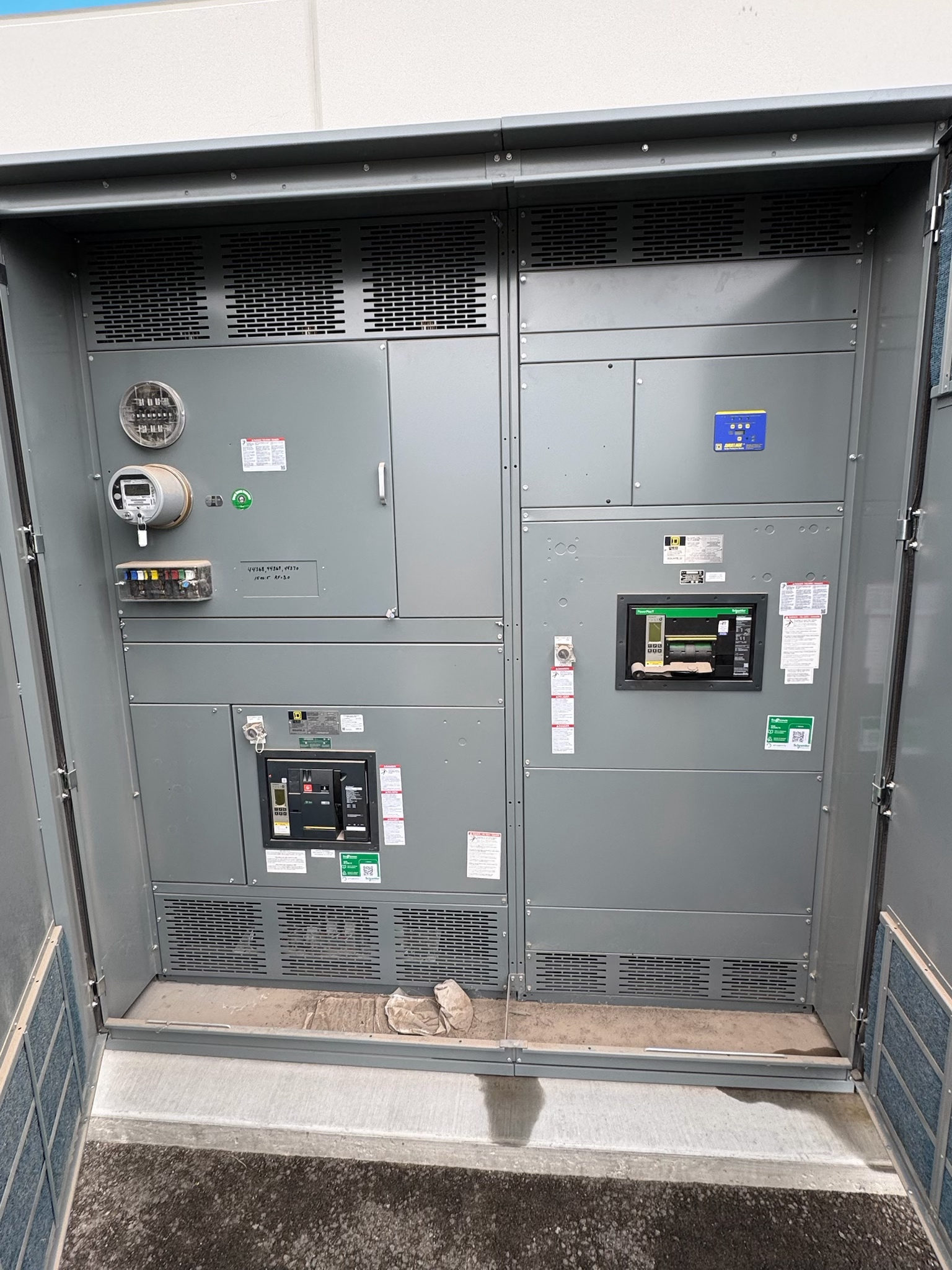
Metal fabrication shapes the switchgear assembly
Switchgear metal fabrication turns an electrical design into an enclosure and supporting structure suited to the equipment’s intended installation. For new switchgear projects in Austin and Central Texas, enclosure decisions affect how components are arranged, how conductors enter and leave, and how operators and maintenance personnel access designated areas. The enclosure is not merely a cabinet around electrical parts: its construction must align with the assembly design, site conditions, applicable codes, and project specifications.
This page introduces choices to resolve before fabrication begins. The appropriate material, dimensions, access features, finish, and openings depend on the equipment and location. Discussing these decisions early helps align the fabricated enclosure with the electrical design and avoid treating a drawing detail as an afterthought. New assemblies are custom-built to specification; the project team should confirm which requirements govern before design release.
Start with location and operating conditions
Define where the assembly will be installed and how it will be used. Indoor and outdoor locations can call for different enclosure designs, but neither label alone establishes a suitable enclosure type. The project specification should identify exposure to weather, dust, moisture, corrosive substances, temperature variation, physical contact, and other relevant conditions. Confirm the enclosure classification and construction against the actual environment and applicable requirements rather than assuming a standard configuration will fit.
Also record the installation arrangement: free-standing or integrated into a larger lineup, available floor space, access clearances, cable routing, and any building or equipment-room constraints. For a Central Texas project, the customer’s site information and design criteria—not a general regional assumption—should guide environmental decisions. Qualified electrical professionals should review the application and applicable codes before enclosure design is finalized.
Choose material and finish for the application
Material and finish choices influence enclosure durability, weight, appearance, and suitability for the site. The specification should state any preference or requirement and explain the conditions behind it, such as indoor use, outdoor exposure, cleaning practices, or a potentially corrosive atmosphere. A finish selected for appearance alone may not address the relevant environmental demands. Conversely, requirements that are not applicable to the installation can add unnecessary design constraints.
Confirm whether the project calls for particular sheet-metal characteristics, coating or finish requirements, color, or surface preparation, and identify who approves those details. The manufacturer can evaluate the requested choices as part of a custom assembly design, subject to project review. Do not assume that one material or finish is suitable for every switchgear application; selection must be coordinated with the intended enclosure design, equipment, and governing specification.
Resolve dimensions, openings, and access
Fabrication drawings should reflect the equipment layout as well as the installation interface. Confirm overall dimensions, mounting provisions, section arrangement, door and panel access, lifting or handling provisions when specified, and the locations and sizes of cable entry areas. Record conduit, busway, or other connection approaches where applicable. Openings and cutouts need to correspond to the approved design; late changes can affect clearances, structural details, component placement, and wiring routes.
Consider how authorized personnel will inspect or service the assembly, without compromising required barriers or access controls. Identify which panels must be removable or hinged, where operating devices and indicators belong, and whether the site requires defined entry points. These decisions should be shown on reviewed drawings rather than left to interpretation at fabrication. Confirm dimensions against the latest electrical and architectural information before release.
Coordinate enclosure details with electrical design
A fabricated enclosure must support the electrical assembly it houses. Coordinate layout and structural details with the equipment configuration, conductor routing, heat-management provisions where specified, grounding and bonding approach, barriers, and required working access. Electrical ratings and protective arrangements are determined by the complete design, not by the metal enclosure alone. Likewise, enclosure construction must not be treated as proof of a particular voltage, current, short-circuit rating, or standards compliance.
Provide the manufacturer with current one-line diagrams, equipment schedules, site constraints, and project specifications as available. Identify the required standards and approval process; applicable standards depend on the assembly type and design. UL 891 applies to suitable switchboard assemblies, not automatically to all switchgear. Qualified electrical professionals must verify the design and relevant authorities must review applicable requirements.
Plan drawing review and quality checks
Before fabrication, establish who reviews and approves enclosure drawings, what information is needed for that review, and how revisions will be controlled. Check dimensions, component placement, cable-entry locations, access features, finish requirements, and interfaces with adjoining equipment. If the project has a required inspection or documentation process, identify it in the specification and coordinate responsibilities with the manufacturer and project team.
Testing and inspection depend on the complete assembly, its design, and the applicable requirements; metal fabrication alone does not determine what evaluations apply. Confirm the planned quality checks and any required records during project review rather than assuming a particular certification or test. Clear approval milestones support practical coordination, especially when the assembly must align with customer-furnished equipment or site drawings.
Prepare a complete fabrication request
For a useful quotation and design review, provide the application, installation environment, required equipment arrangement, target dimensions, cable-entry plan, material or finish preferences, applicable standards, and any customer drawing or documentation requirements. Mark which details are mandatory and which are open to engineering review. Include the project schedule and identify the date by which approved drawings are needed; lead times are project-dependent and should be confirmed after the scope is reviewed.
A US manufacturer using all-American components can build new custom assemblies to specification and ship nationwide, with UL 891 assemblies where applicable. For a Central Texas project, the customer can coordinate site measurements, freight access, receiving arrangements, and drawing approvals with the project team without assuming a local factory or a fixed delivery date. The next step is a specification review by qualified electrical professionals and the manufacturer before the enclosure design is released.
Project specification checklist
Use this checklist to organize the details for a project-specific review. Final ratings, applicable standards and equipment selections depend on the approved design.
| Item | What to confirm |
|---|---|
| Installation environment | Confirm indoor or outdoor use and document relevant moisture, dust, corrosion, temperature, and exposure conditions. |
| Enclosure construction | Specify material and finish preferences or requirements, with the application and approval criteria identified. |
| Dimensions and interfaces | Provide verified footprint, mounting needs, cable-entry locations, and connections to adjacent equipment or structures. |
| Access and layout | Identify door, panel, operating-device, service-access, barrier, and clearance requirements on reviewed drawings. |
| Standards and verification | List applicable project standards, review authorities, required inspections, testing, and documentation for the assembly design. |