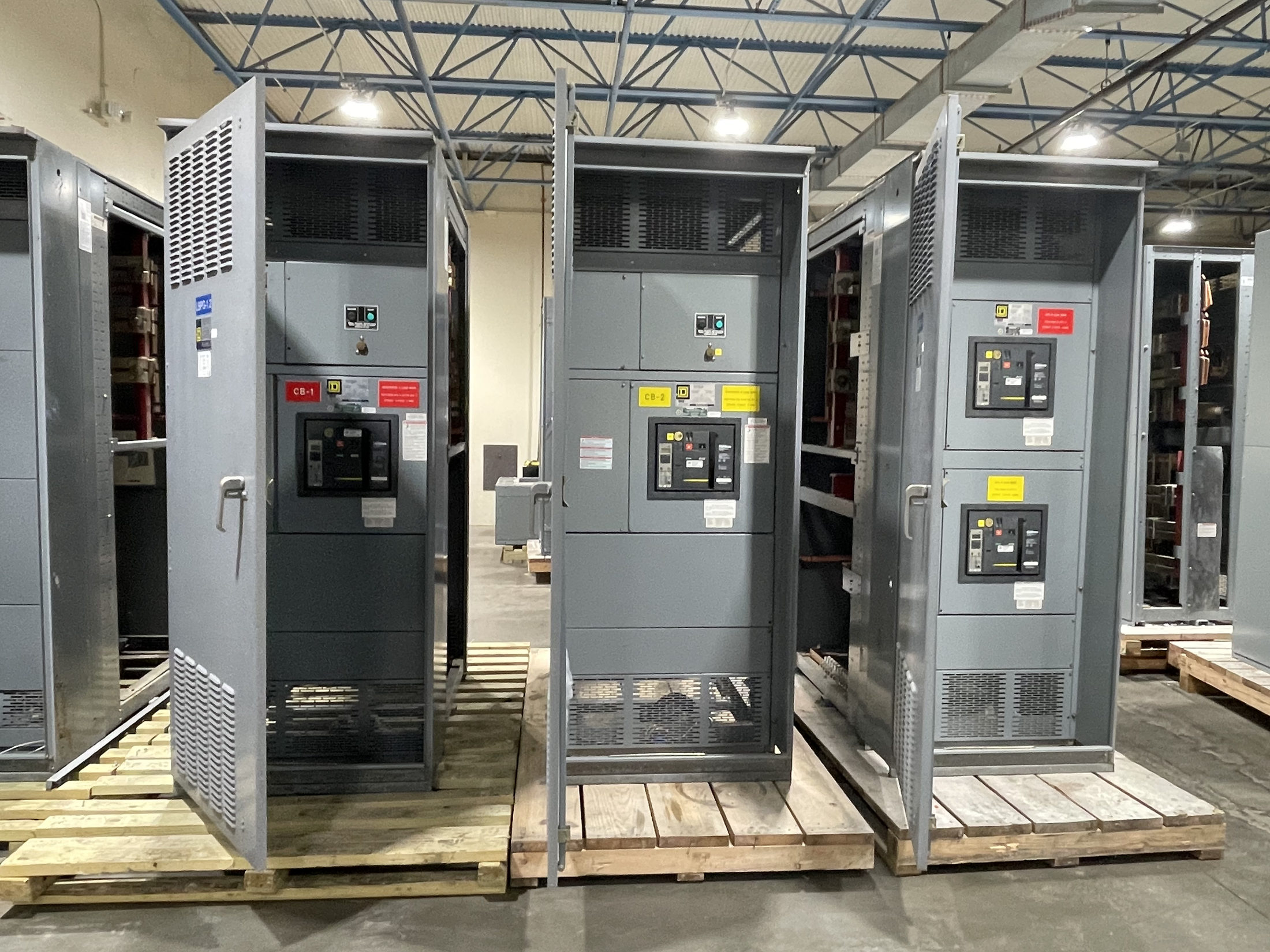
Separate utility revenue metering from owner monitoring
Switchboard metering sections provide an organized place for measurement devices and their electrical interfaces, but the required arrangement depends on who uses the readings. Utility revenue metering may be governed by the serving utility’s metering standards and approval process. Owner metering is typically selected to support operational visibility, energy allocation, or building management. These functions can coexist, but they are not interchangeable: a utility-approved revenue meter does not automatically satisfy an owner’s monitoring needs, and an owner meter does not establish utility acceptance.
Start by identifying the point of service, the party responsible for each meter, the intended use of the data, and any utility documents that define the interface. For projects in Austin or elsewhere in Central Texas, the project team should obtain requirements from the applicable serving utility rather than infer them from another installation. Confirming these roles early helps shape new electrical switchboards without relying on assumptions about meter approval or device compatibility.
Define the electrical measurement points
Metering design begins with the one-line diagram and a clear description of what each meter must measure. Confirm whether readings are needed for the incoming service, individual feeders, a generation or storage connection, or another defined point. The project engineer should specify the measurement arrangement, including voltage and current sensing, phase configuration, and the relationship between meters and protective devices. The suitable approach depends on the system design; no single sensing method, meter location, or switchboard configuration applies to every project.
For current transformers or other sensing components, document the required ratios, accuracy needs, burden or device compatibility, polarity and terminal arrangements as applicable. Confirm whether sensing components are integral to the switchboard design or furnished separately, and define who supplies and connects them. Voltage sensing, fusing, disconnecting provisions, and test access also need project-specific review. These details should be coordinated with the engineer, meter supplier, and utility when revenue metering is involved, rather than left to field interpretation.
Coordinate utility and owner interfaces
A utility metering interface may specify a meter socket or enclosure arrangement, access, sealing provisions, wiring, test facilities, or other utility-defined details. The serving utility’s current requirements must be reviewed for the actual service and project. Confirm who provides each component, who makes external connections, and what information must be submitted for review. Do not assume that a switchboard arrangement accepted for one service territory or project will be accepted elsewhere.
Owner metering interfaces call for a separate conversation about data use and communications. Identify the meter protocol or output requirements, network or building-management-system connection, data points, and responsibility for gateways or external wiring. Confirm whether communications hardware belongs in the switchboard, in a separate enclosure, or in the owner’s system. Keep power measurement and communications boundaries explicit on drawings and procurement documents so that meter functions, wiring terminations, and responsibility for integration are understood before equipment is released.
Choose section layout and access deliberately
The metering section’s physical arrangement affects safe access, installation coordination, and future operation. Review the switchboard lineup, meter viewing and service access, door or compartment arrangement, conductor routing, and separation from adjacent equipment against the project design and applicable requirements. Any enclosure characteristics, environmental conditions, clearances, and working-space needs must be established for the site and verified by qualified professionals; they cannot be assumed from the product name alone.
Also resolve how the metering section relates to the main device, bus, service conductors, and downstream distribution. The design may need provisions for meter wiring, terminal blocks, barriers, labels, or test access, depending on the specified devices and applicable utility requirements. Document which items are part of the new switchboard assembly and which are by others. These choices affect dimensions, component selection, drawings, and coordination with the electrical room layout, so settle them before final approval.
Review drawings, standards, and testing scope
Before fabrication, compare the switchboard submittals with the approved one-line, utility metering documents, owner meter schedule, and interface drawings. Check instrument-transformer data, meter model requirements, wiring diagrams, terminal identification, communications points, and any utility-furnished or owner-furnished devices. Identify discrepancies in writing and obtain direction from the responsible engineer and utility as applicable. Applicable standards and any listing or certification depend on the equipment design and project; UL 891 applies to suitable switchboards, not automatically to every assembly or metering arrangement.
Define inspection and testing responsibilities in the project documents. Factory checks may address assembly and wiring according to the agreed scope, while utility acceptance, meter programming, communications commissioning, and field verification may involve other parties. State which tests or records are required, who witnesses them, and what must be available before energization. Testing and acceptance plans should be reviewed by qualified electrical professionals and relevant authorities; they are not a substitute for approved design or safe work procedures.
Prepare a complete procurement package
For a quotation or design review, provide the service one-line, switchboard schedule, applicable utility metering requirements, meter and sensing-device specifications, and owner monitoring needs. Include service and feeder measurement points, required data or communications interfaces, physical layout constraints, and the division of supply and connection responsibilities. Mark items still under utility review instead of treating them as settled. A complete package allows the manufacturer to identify open decisions and evaluate a custom assembly to specification without assuming ratings, device compatibility, or approval.
For new switchgear serving Austin and Central Texas, coordinate submittal timing with the utility, engineer, meter supplier, and site electrical team; customers elsewhere can also discuss nationwide shipment coordination. Confirm the project-specific lead time, drawing review sequence, and release requirements before scheduling around delivery. The practical next step is to resolve the metering boundary, obtain written utility requirements, and send the coordinated documents for review. That sequence reduces avoidable redesign and makes clear what the finished switchboard metering section is expected to measure and interface with.
Project specification checklist
Use this checklist to organize the details for a project-specific review. Final ratings, applicable standards and equipment selections depend on the approved design.
| Item | What to confirm |
|---|---|
| Metering purpose | Identify revenue metering, owner monitoring, or both, and define each meter’s intended use and responsible party. |
| Measurement points | Show the service, feeders, or other circuits to be measured on the one-line and meter schedule. |
| Sensing and meter devices | Confirm device models, sensing-component data, wiring, accuracy needs, and compatibility with the specified system. |
| Utility interface | Obtain current serving-utility requirements and confirm approval, access, sealing, and supply responsibilities. |
| Owner communications | Specify required data, protocol, connection destination, and responsibility for gateways and external wiring. |
| Submittals and testing | Agree on drawing review, inspection, test records, witnesses, and separate utility or owner acceptance steps. |