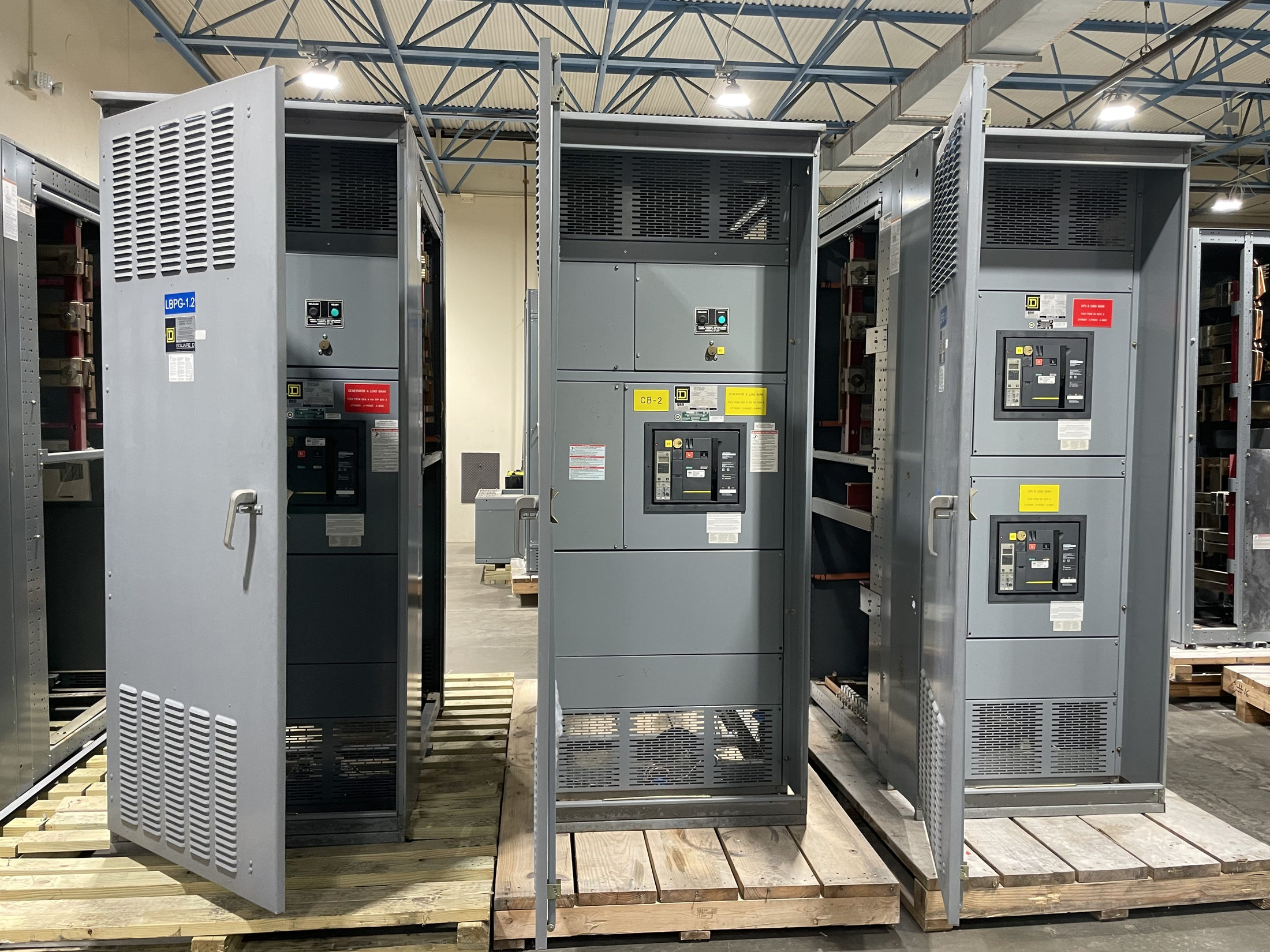
Plan the Pad-Mounted Installation Around the Site
Pad-mounted switchgear is installed at ground level on a concrete pad or other project-defined foundation, often where an outdoor distribution point must be accessible without placing switching equipment inside a building. For a new installation in Central Texas, begin with the one-line diagram, site plan, and the intended role of the equipment: service entrance, feeder distribution, sectionalizing, or another function established by the electrical design. Confirm who owns and operates each part of the system, including the interface with the serving utility. Those decisions shape the equipment arrangement, terminations, protection scheme, and access requirements; the phrase “pad-mounted” alone does not define a complete design.
Verify Utility Interface and System Conditions
Provide the project’s system voltage, phase and frequency, grounding method, available fault-current information, and operating configuration for review by qualified electrical professionals. Confirm the source and load connections, number of ways, cable entry direction, conductor information, and whether the design requires switching, fusing, or other protective functions. Utility standards and approval processes may apply at the service interface, so identify the serving utility early and obtain its current requirements rather than assuming a familiar arrangement will be accepted. Equipment ratings and configurations must be selected for the actual system and reviewed against applicable standards; no voltage, current, or short-circuit value should be treated as universally suitable.
Resolve Access, Foundation, and Environmental Inputs
A useful site review considers the pad dimensions and loading criteria, equipment footprint, cable trench or duct-bank locations, bend space, drainage, and the path used to place the assembly. Keep required working and operating clearances in view, and coordinate doors, operating handles, barriers, and cable compartments with the site layout and applicable codes. Confirm exposure to weather, dust, moisture, corrosive conditions, and potential vehicle impact so the enclosure and protective features can be specified appropriately. The final foundation and enclosure decisions depend on project documents and engineering review, not a generic outdoor assumption. Share current civil, architectural, and electrical drawings before the arrangement is finalized.
Define Protection, Switching, and Custom Arrangement
Translate the operating plan into a clear functional specification. Identify which circuits need isolation, how switching is expected to occur, what protective devices and settings are required, and whether metering, control, interlocking, or indication belongs in the assembly. Protection coordination should use system studies and the project’s operating requirements; device selection cannot responsibly be made from a product label alone. Custom assemblies can be developed to project specifications, subject to design review and applicable requirements. UL 891 applies to suitable switchboard assemblies, not automatically to pad-mounted switchgear or every configuration. Ask which standards and any required listings apply to the specific design, and document these requirements in the procurement package.
Coordinate Submittals, Testing, and Delivery Planning
Before release, align the equipment drawings with the one-line diagram, cable schedule, civil pad details, utility interface, and protection documentation. Resolve termination types, phase arrangement, labeling, accessories, control wiring, and any required factory documentation while changes are still manageable. Confirm what inspection and testing are included in the project specification, what results or records are expected, and who will review them. Testing plans should be appropriate to the equipment design and performed by qualified personnel under safe procedures; they do not replace site acceptance or commissioning requirements. Lead time depends on the approved scope and project conditions, so coordinate submittal review, manufacturing milestones, and shipment needs without relying on an assumed delivery date.
Prepare a Complete Request for New Equipment
For a useful first review, assemble the latest one-line diagram, system study information, site and foundation plans, utility requirements, equipment schedule, and desired operating sequence. Mark known constraints such as cable entry, access direction, environmental exposure, and the required shipment destination. Identify open questions instead of filling gaps with assumed ratings or standard configurations. A manufacturer can then evaluate the requested arrangement, identify missing inputs, and develop a proposal for new switchgear built to the project specification. US-built equipment using all-American components is available from the manufacturer, with nationwide shipping; confirm project-specific scope and logistics during procurement. In Central Texas, coordinate the equipment schedule with the local project team and serving utility while keeping approvals and site readiness distinct from shipment.
Project specification checklist
Use this checklist to organize the details for a project-specific review. Final ratings, applicable standards and equipment selections depend on the approved design.
| Item | What to confirm |
|---|---|
| System and fault data | Confirm voltage, phase, grounding, available fault current, and operating configuration from project documents and qualified engineering review. |
| Functional arrangement | Define source and feeder ways, switching duties, protective devices, metering, controls, and operating sequence. |
| Utility interface | Identify ownership boundaries and obtain current serving-utility requirements and review criteria. |
| Site and enclosure | Verify pad and duct-bank details, access clearances, cable entry, environmental exposure, and required enclosure features. |
| Submittal and testing | Specify drawing reviews, applicable standards or listings, factory documentation, test expectations, and acceptance responsibilities. |
| Procurement and logistics | Provide the approved scope, shipment destination, schedule needs, and project coordination contacts for lead-time review. |