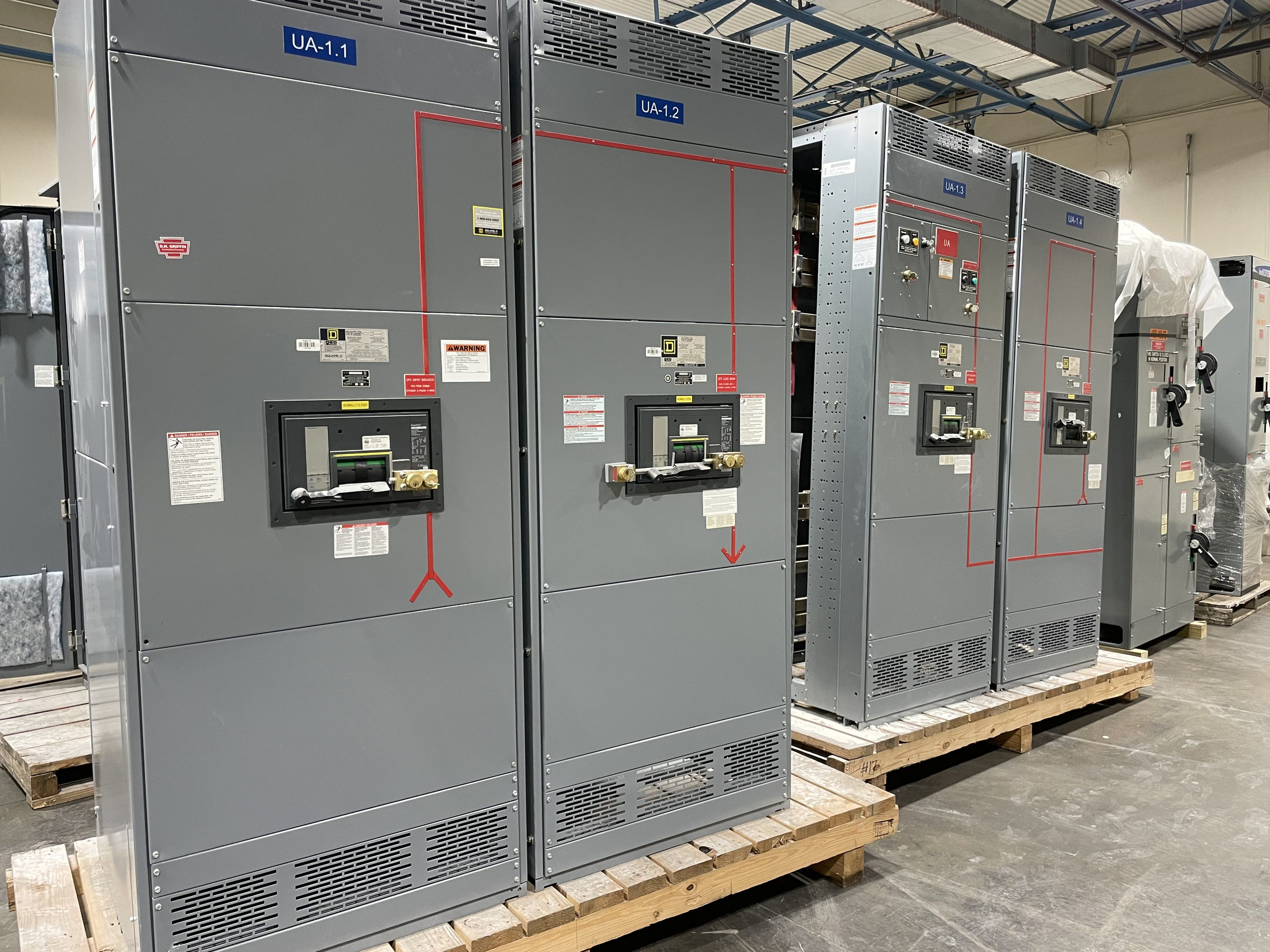
Start with the Project and Its Purpose
A useful request for a switchgear quote begins with what the equipment must do—not with an assumed product size. Describe the facility or project, whether the equipment is for new construction, expansion, or replacement, and the loads or distribution functions it will serve. Identify whether you are evaluating a switchboard, low-voltage switchgear, or another assembly; if the equipment type is uncertain, explain the application and ask for help identifying what information is needed. A new switchgear quote should be based on the project’s actual requirements, not a generic price for equipment that may not fit the electrical design.
For Central Texas projects, include the site location and the parties responsible for design, installation, and approval. This helps establish shipping and coordination needs without assuming a local office, installation service, or site-specific code interpretation. State the project phase and any quote deadline, and distinguish firm requirements from preferences that can be reviewed.
Provide Electrical Ratings and Source Information
Share the one-line diagram and the latest electrical specifications when available. The quote review needs the system voltage, phase and wire configuration, frequency, required continuous current, and available fault-current information at the equipment location. Include the source details, such as transformer data or upstream protective-device information, when provided by the project engineer. These values must be checked against the design; do not select a rating from a rule of thumb or assume that a rating suitable at one point in the system is suitable at another.
Identify the grounding arrangement, service or feeder role, and any required neutral or ground provisions. If information is incomplete, mark what is preliminary and name who will confirm it. Electrical ratings, protective-device coordination, and applicable standards depend on the project and equipment design, so qualified electrical professionals must review the final requirements.
Describe Configuration, Space, and Environment
Explain the arrangement you expect: incoming and outgoing connections, feeder count, breaker or fused-device requirements, metering, controls, and any communications interfaces. Attach panel schedules, load summaries, control schematics, or equipment lists that clarify the scope. If you have a preferred lineup arrangement, note the available width, height, depth, access direction, and working-space constraints shown in the project documents. These details affect assembly layout and connection planning; they are not a substitute for code-compliant installation review.
Describe the installation environment and any specified enclosure, access, or environmental requirements. Do not assume an enclosure type or construction is appropriate without confirming the location and governing specification. Identify cable entry and exit preferences, conduit or bus connection expectations, and restrictions on lifting or delivery access if known. These inputs help shape a project-specific design rather than imply every configuration is available for every application.
Clarify Scope, Standards, and Design Choices
Separate required features from options in the request. For example, state whether metering, surge protection, arc-energy-reduction features, spare provisions, or specific protective-device functions are required by the project documents. Include manufacturer preferences only if they are genuine project constraints, and identify acceptable alternatives for review. For assemblies intended to meet UL 891, specify that requirement and the applicable scope; UL 891 applies to suitable switchboards, not automatically to every type of switchgear or every assembly.
Ask the design team to identify governing standards, authority requirements, and any project-specific documentation expectations. Do not treat a requested feature or standard as confirmed until it is reviewed for the proposed design. A custom assembly can be developed to specification, but the final configuration, ratings, and compliance basis require technical review. Use the detailed topic pages for switchboard versus switchgear selection, ratings, enclosures, and standards when those decisions need more context.
Coordinate Drawings, Testing, and Procurement
State what submittals are needed and when they must be reviewed, including outline drawings, connection details, device schedules, and other project documents. Identify the engineer, contractor, or owner contact who will resolve technical questions, and note any approval sequence that affects release for production. Clarify whether the quote should include factory testing or documentation requirements specified for the assembly. Testing scope and acceptance criteria should be defined for the particular design; do not assume a test, certification, or approval is included unless the quote confirms it.
For procurement planning, provide the requested delivery destination, receiving constraints, target on-site date, and any phasing or shipment preferences. Lead times depend on the project and must be confirmed during review; a target date is not a delivery commitment. The manufacturer builds in the USA with all-American components and can ship nationwide, while shipping arrangements and timing remain project-specific.
Submit a Complete Request and Resolve Open Items
Before you request switchgear pricing, assemble the current one-line diagram, specifications, schedules, site and shipment details, and a concise list of requested options. Label document revisions and identify unresolved values instead of filling gaps with guesses. Include the project name for reference, but avoid sending sensitive information that is not needed for the quote. A complete request makes it easier to identify assumptions, exclusions, and questions that could otherwise change configuration or pricing.
After submission, review the quote against the project documents: confirm equipment scope, ratings, included accessories, standards basis, submittal expectations, shipping assumptions, and items left for engineering confirmation. Route technical questions to qualified electrical professionals and relevant authorities before approving a design. If the equipment type or specifications are not settled, request a review of the missing decision points first; that is more useful than treating preliminary information as a final order.
Project specification checklist
Use this checklist to organize the details for a project-specific review. Final ratings, applicable standards and equipment selections depend on the approved design.
| Item | What to confirm |
|---|---|
| Application and equipment type | Describe the facility, project phase, distribution function, and whether the requested assembly type is established or needs review. |
| Electrical system data | Provide project-specified voltage, phase, current, fault-current information, source data, grounding, and protective-device requirements for verification. |
| Configuration and installation | Include feeder and device schedules, connection preferences, space constraints, access, cable entry, and specified environmental conditions. |
| Standards and options | Identify governing project requirements, applicable standards, required features, acceptable alternatives, and any UL 891 requirement for suitable switchboards. |
| Documents, schedule, and delivery | List drawing and testing expectations, approval contacts, document revisions, destination, receiving constraints, and target dates for review. |