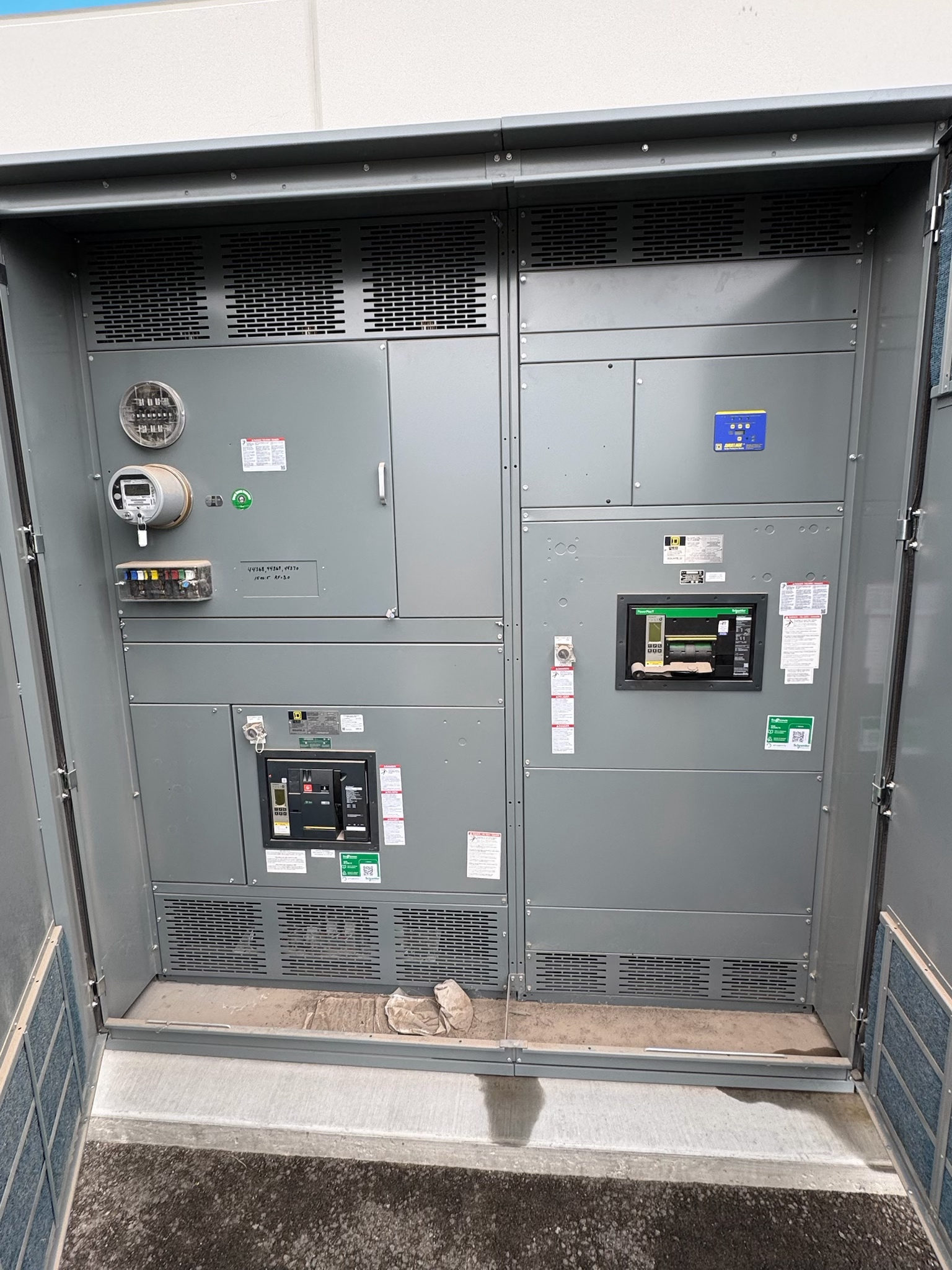
Define the Retrofit Scope Before Requesting a Quote
A retrofit quote for new switchgear begins with a clear boundary: identify what equipment will be replaced, what will remain, and which connected systems must be accommodated. The replacement may involve a switchboard, switchgear lineup, or another assembly, but the correct equipment type depends on the existing distribution design and project requirements. Include the facility’s intended use, the reason for replacement, and whether the work is a like-for-like change or an opportunity to revise the distribution arrangement. These details help distinguish equipment supply from related engineering, demolition, installation, and commissioning work, which should be assigned and coordinated separately.
Provide current one-line diagrams, equipment schedules, available nameplate information, and photographs where permitted. Mark missing, outdated, or conflicting records rather than treating them as verified. A qualified electrical professional should confirm the existing system and define the design basis; the quote can then identify assumptions and open items instead of embedding guesses in the proposed scope.
Document Electrical Ratings and Protection Needs
Replacement equipment must suit the electrical system at its point of connection. Share the system voltage and frequency, phase and wire arrangement, source configuration, and available fault-current information when established by the project team. Identify required continuous-current and short-circuit ratings, protective-device types, and coordination or selective-tripping objectives. None should be carried over automatically from old equipment: system changes, revised utility data, or a different lineup arrangement can affect what is appropriate. Ratings and protective-device selections require project-specific evaluation by qualified professionals and review by relevant authorities.
Describe operating conditions that could influence design, such as load profile, motor or other significant loads, generator or alternate-source connections, and expected future expansion. Identify grounding and neutral requirements, metering, monitoring, and control interfaces. Applicable standards and any requested listing depend on equipment type and design; UL 891 applies to suitable switchboard assemblies, not automatically to every switchgear product. State requested standards or certification requirements for review, without assuming applicability before the design is established.
Resolve Physical Fit and Existing Interfaces
A new assembly must fit the available space and connect to the system it is intended to serve. Supply verified room dimensions, access routes, ceiling and floor constraints, equipment orientation, and any restrictions on moving or positioning the lineup. Record existing bus or cable connection locations, conductor entry direction, termination space, grounding provisions, and the relationship to upstream and downstream equipment. Existing drawings may not reflect field conditions, so flag information that still needs measurement or confirmation. These inputs help determine whether the proposed arrangement can be fabricated and transported for the site’s actual constraints.
Identify interfaces beyond power conductors: control wiring, communications, metering signals, interlocks, protective relays, and connections to generators or transfer equipment, if present. Clarify which components are being retained and who will verify compatibility. Confirm enclosure and environmental requirements based on the installation location and governing design criteria; do not assume a particular enclosure type from the existing equipment. Any changes to the room, conductors, or connected systems should be defined with the responsible project professionals.
Plan Around the Outage and Changeover
Outage limits can shape a retrofit as strongly as electrical ratings. Tell the quoting team which loads must remain available, what shutdown windows the facility can support, and whether the work must be divided into phases. Identify critical loads, temporary-power expectations, switching constraints, and the party responsible for outage planning. A quote for new equipment does not by itself establish an installation sequence or guarantee a specific outage duration. Those plans depend on site conditions, approved procedures, staffing and contractor scope, and confirmation of the existing system.
Discuss manufacturing and delivery timing against the project schedule, including when approved drawings, interface data, and final decisions will be available. Ask which schedule milestones depend on submittal review, design resolution, and production release. Do not set a cutover date until the equipment scope, construction plan, and outage approvals are coordinated by the project team. Work on electrical systems should be planned and performed by qualified personnel under applicable safety procedures; this page is not a direction to work on energized equipment.
Establish Design Review and Test Expectations
For a useful quote, distinguish required deliverables from items still under discussion. Identify drawing and submittal expectations, including the information needed to review dimensions, connections, protective-device arrangement, controls, and interfaces. Specify any project-required inspection, testing, or documentation, and clarify who performs and witnesses each activity. Factory testing, field testing, acceptance criteria, and commissioning are not interchangeable; their scope and applicability should be confirmed for the selected equipment and project. Relevant standards, authority requirements, and the final test plan must be established by the responsible professionals.
Before release, review proposed assumptions against site records and resolve open technical questions with the engineer, facility representative, and other responsible parties. Confirm who approves drawings, supplies final fault-current and load data, defines field connection responsibilities, and communicates design changes. This review helps prevent a replacement assembly from being quoted on incompatible dimensions, incomplete controls information, or unverified protection requirements. Where the project requires UL 891, confirm that the proposed assembly is suitable for that standard rather than assuming it applies to all equipment in the scope.
Prepare a Complete Request and Compare Scope
When you request a switchgear quote, send the scope boundary, one-line diagram, available nameplate data, physical constraints, interface list, outage requirements, target schedule, and identified standards or testing needs. Separate confirmed facts from estimates and unanswered questions. Ask the manufacturer to state the proposed equipment scope, design assumptions, exclusions, required customer inputs, and items that remain subject to engineering review. This makes it easier to compare proposals on equivalent boundaries rather than judging them by price or lead-time language alone. The manufacturer builds new equipment in the USA using all-American components, offers custom assemblies to specification, and can ship nationwide; project timing is determined by scope and review.
A practical next step is to arrange a focused technical review before finalizing the request: verify the source and load interfaces, confirm measured room and access conditions, and have qualified professionals establish the design ratings and applicable requirements. Then identify a decision owner for each unresolved item and a date for providing it. Clear inputs help the proposed new switchgear reflect the retrofit’s actual constraints and give the project team a sound basis for procurement planning.
Project specification checklist
Use this checklist to organize the details for a project-specific review. Final ratings, applicable standards and equipment selections depend on the approved design.
| Item | What to confirm |
|---|---|
| Existing system records | Provide current one-line diagrams, schedules, nameplate data, and clearly marked gaps or unverified information. |
| Electrical design basis | Confirm system configuration, load needs, fault-current data, protection objectives, and ratings through qualified project review. |
| Physical and connection interfaces | Verify room dimensions, access, conductor entry and terminations, grounding, controls, communications, and retained equipment. |
| Outage and schedule constraints | State critical loads, allowable shutdown windows, phasing needs, temporary-power expectations, and project milestones. |
| Submittal, standards, and testing | Identify required drawings, applicable standards or listings, inspection and test scope, documentation, and approval responsibilities. |