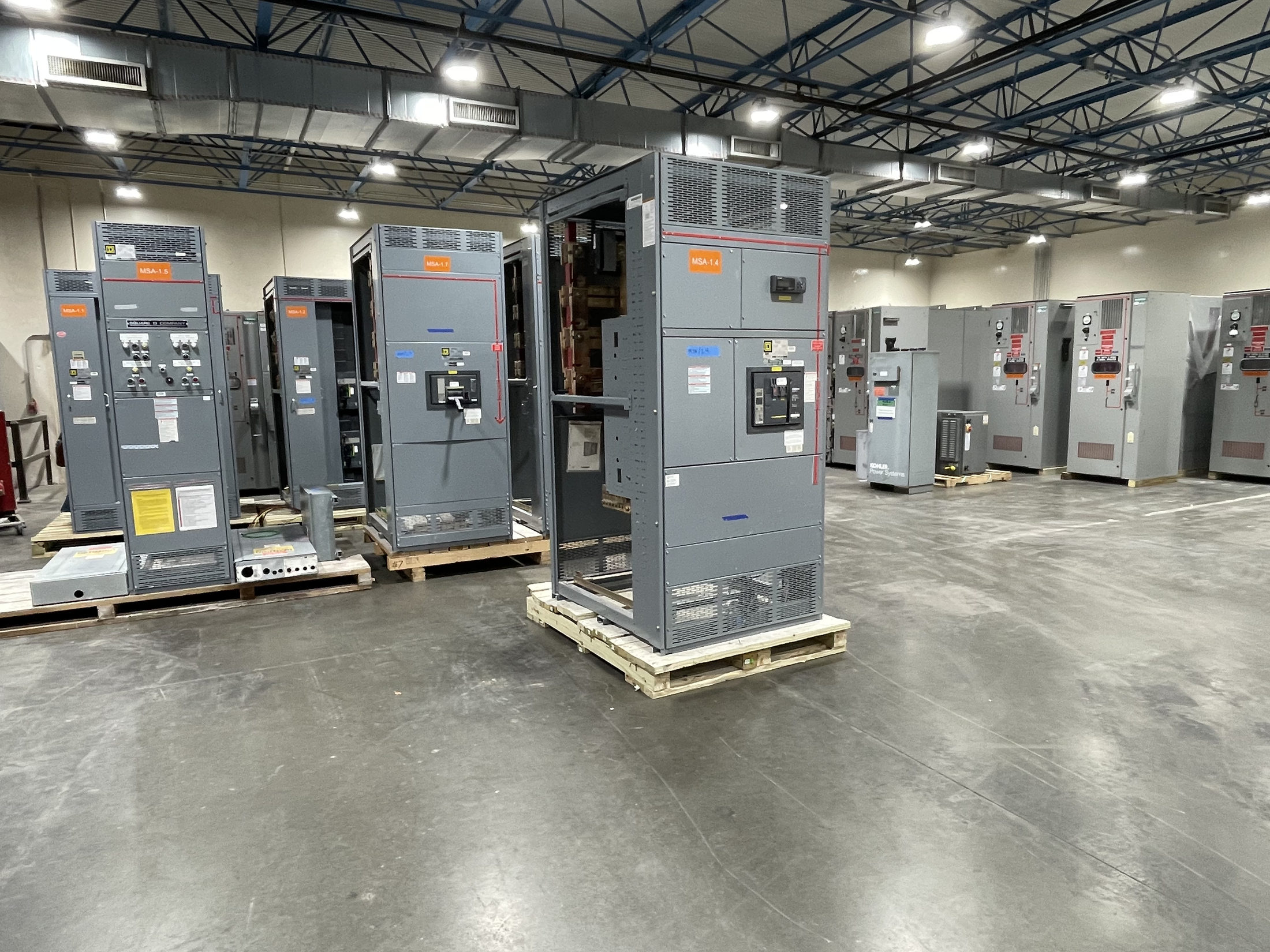
Shipping Sections Shape the Delivery Plan
Shipping section dimensions are not just a transportation detail. They affect how new switchgear can be moved from the carrier’s vehicle to its final position, whether the building route is workable, and how much field assembly the project may require. A lineup’s overall arrangement may need to be divided into sections for shipment, but the practical section boundaries depend on the equipment design and the site’s access constraints.
For an Austin or Central Texas project, share the delivery address and route information early, including receiving hours, unloading arrangements, access gates, overhead obstructions, turns, ramps, door openings, and the path to the electrical room. These inputs help identify constraints before the assembly configuration is finalized; they do not establish that a particular section size or delivery method will suit every site.
Confirm the Route, Not Just the Doorway
A clear opening is only one part of the route review. Consider the narrowest point, turning space, ceiling height, floor transitions, slopes, loading dock conditions, and any corridor or elevator limits. A section that passes through a doorway may still be too long to turn, too tall for an overhead obstruction, or too heavy for a floor or lifting device. The project team should verify the entire path from unloading point to final placement.
Provide measured dimensions and any available building or material-handling restrictions to the equipment supplier and the site’s qualified professionals. Confirm who will arrange unloading, what equipment is permitted, and whether the route will be clear on delivery day. Do not treat estimated dimensions as approval: field conditions, packaging, handling clearances, and the final equipment configuration need review before transportation is arranged.
Evaluate Section Weight and Lifting Interfaces
Section weight depends on the design, installed devices, bus arrangement, enclosure construction, and shipping configuration. Ask for the project-specific weight of each shipping section, not just an overall lineup estimate. The receiving and rigging plan should account for the handling method, load distribution, access to lifting points, and any restrictions imposed by the building or lifting equipment. A qualified professional should determine whether the proposed handling approach is suitable.
Clarify how each section is intended to be lifted and whether shipping restraints or packaging affect access to lifting provisions. The manufacturer’s handling information should be reviewed alongside the site plan; lifting points should not be assumed from appearance or inferred from another assembly. If the route requires rolling, skidding, or a change in orientation, confirm that the proposed method is acceptable for the specific equipment before proceeding.
Balance Enclosure Design and Environmental Conditions
Enclosures and environmental design can influence dimensions, weight, access, and installation clearances. The specified enclosure type and construction must suit the intended location and environmental conditions, while remaining compatible with the project’s shipping and access limits. Do not assume an enclosure option, environmental rating, or construction detail applies universally; confirm the required design and applicable standards for the actual application.
Share relevant indoor or outdoor conditions, exposure concerns, space constraints, and required access for operation and maintenance during specification review. Also identify nearby walls, cable entry areas, ventilation or other site interfaces that affect placement. These inputs can influence section arrangement and field assembly boundaries. Any changes made to address shipping limits should be reviewed for their effect on the enclosure, equipment layout, electrical interfaces, and project requirements.
Coordinate Interfaces and Field Assembly
When an assembly ships in multiple sections, the project team needs to understand how those sections align and connect at the installation location. Confirm the intended lineup sequence, mechanical joining details, electrical connections between sections, and any space needed for assembly or access. Check that the planned room layout permits the required work and that cable, grounding, and other project interfaces remain accessible after placement.
Discuss what work is completed before shipment and what must be completed at the site. Field assembly requirements depend on the approved design and should be documented for coordination with the responsible electrical professionals. Where applicable, testing and inspection plans should distinguish factory activities from field verification and address the assembled configuration. Applicable standards and any UL 891 scope depend on the equipment and design; do not assume a listing transfers to every assembly or section.
Turn Shipping Inputs into a Procurement Checklist
Before requesting a final shipping arrangement, assemble the electrical specification, room layout, measured delivery route, receiving constraints, and preferred placement sequence. Ask for project-specific section dimensions and weights, the expected shipping configuration, lifting information, and the interfaces requiring site assembly. Flag uncertain measurements and identify who will verify them. This gives the design and procurement teams a basis for resolving access conflicts before the equipment configuration is released.
For custom new switchgear, review any proposed section break against the electrical arrangement, enclosure requirements, site constraints, and schedule. Lead times depend on the project, and shipping details should be coordinated with the approved design rather than treated as a last-minute carrier decision. The practical next step is a joint review by the purchaser, manufacturer, site team, and qualified electrical professionals, followed by confirmation of the final handling and assembly plan.
Project specification checklist
Use this checklist to organize the details for a project-specific review. Final ratings, applicable standards and equipment selections depend on the approved design.
| Item | What to confirm |
|---|---|
| Route dimensions | Confirm measured openings, turns, overhead clearance, slopes, and the complete path from unloading to placement. |
| Section dimensions and weights | Request project-specific values for each shipping section and confirm whether packaging or restraints affect handling. |
| Lifting and unloading | Verify intended lifting provisions, handling method, unloading responsibilities, and site equipment suitability. |
| Enclosure and environment | Confirm the required enclosure design, environmental conditions, access clearances, and applicable project requirements. |
| Assembly interfaces | Document lineup sequence, section connections, field work, cable and grounding interfaces, and testing responsibilities. |