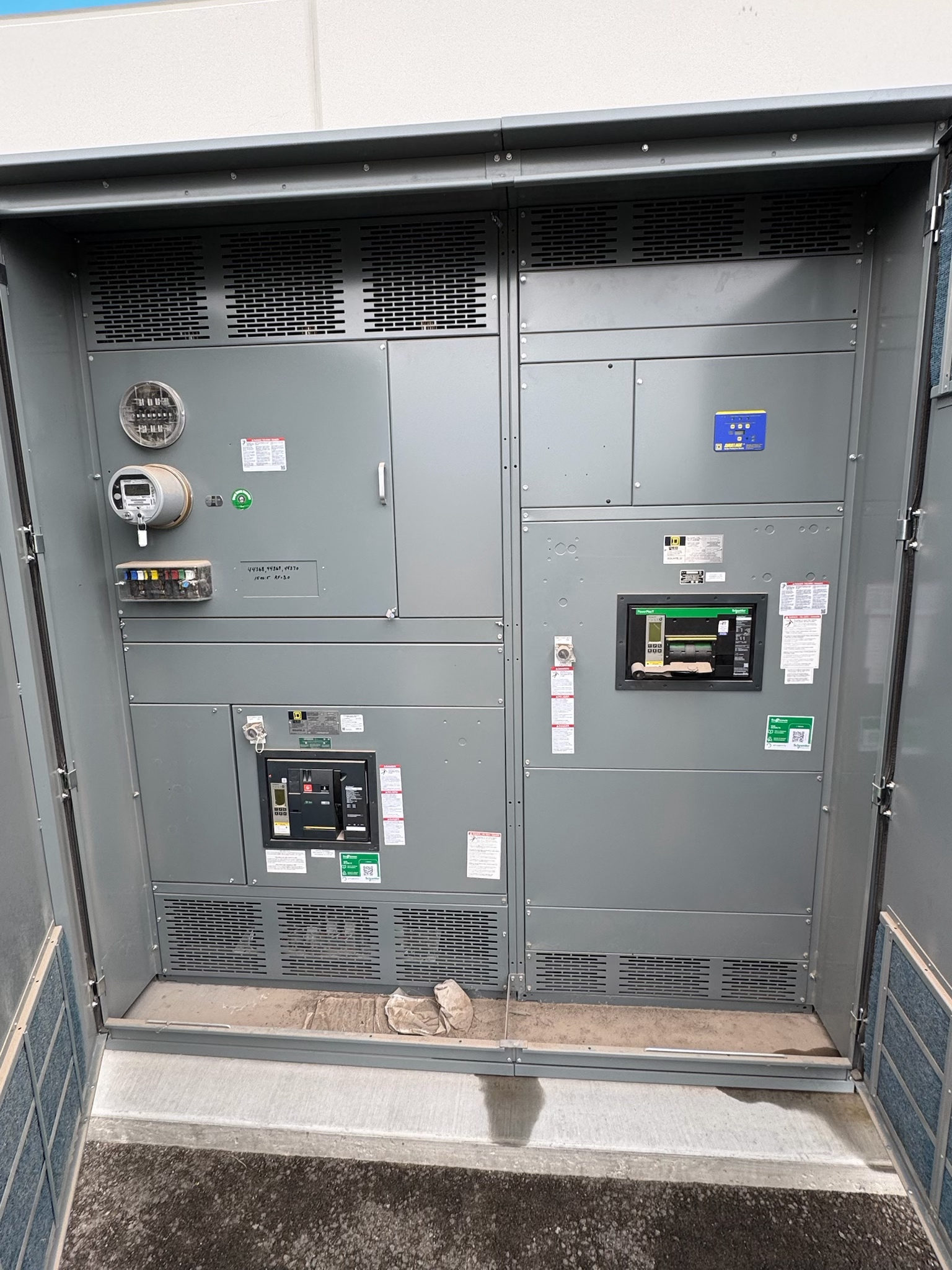
Plan Storage Before Scheduling Delivery
Site storage before installation starts with the gap between receipt and setting the equipment in its final location. New switchgear may arrive before the electrical room, foundation, access route, or connected systems are ready, so the storage plan should be established before delivery is scheduled. Confirm who will accept the shipment, where it can be placed, how long storage is expected to last, and who is responsible for preserving the equipment and its records.
The manufacturer’s shipping and storage instructions for the specific assembly take precedence over general practices. Ask for those instructions during procurement and share them with the receiving contractor, site manager, and other parties handling the equipment. The agreed plan should account for the actual packaging, configuration, and project conditions rather than assume all switchgear can be stored in the same way.
Choose a Suitable Storage Location
Select a location that is secure, clean, dry, and appropriate for the equipment’s packaging and handling requirements. Check for roof or plumbing leaks, standing water, construction washdown, dust-producing work, corrosive materials, and exposure to weather. Consider whether forklifts or other planned handling methods can reach the storage area without striking the equipment or blocking emergency and construction access. Keep the route to the electrical room clear in the installation sequence.
Confirm floor capacity, levelness, and any support or orientation requirements against the shipping instructions and project conditions. Do not assume a crate can be stacked, tilted, moved by any convenient lifting point, or left outdoors because it appears protected. If the intended location cannot maintain the required conditions, resolve the issue before dispatch by coordinating a different receiving date or approved storage arrangement.
Control Moisture and Condensation
Moisture protection is a central part of storage planning because rain, leaks, high humidity, and temperature swings can affect equipment and packaging. Keep the assembly protected as directed by the manufacturer, and avoid opening protective coverings unnecessarily. A sealed package is not a substitute for appropriate environmental conditions; condensation can occur when equipment moves between different temperatures or is exposed to changing site conditions.
Ask the supplier for any project-specific instructions concerning packaging integrity, desiccants, ventilation, inspection, or environmental limits. Do not add heat, heaters, or moisture-control devices unless the instructions permit them and the method is safe for the specific equipment. If packaging is wet or damaged, or moisture is found inside, document the condition and contact the responsible supplier representative before proceeding. Do not energize or treat affected equipment as ready for installation without qualified evaluation.
Set Responsibilities at Delivery Handoff
A clear handoff reduces uncertainty about equipment condition and custody. Before delivery, identify the receiving party, delivery access and timing constraints, unloading resources, staging location, and process for recording visible damage or missing items. Confirm how shipping documents, packing lists, handling markings, and storage instructions will reach the electrical contractor and the person responsible for the site storage area.
At receipt, compare shipment identification and package count with the delivery documents, and record visible damage or unusual conditions promptly under the agreed freight and procurement process. Photographing the exterior and noting damaged wrapping can help preserve a useful record, but does not replace required notifications. Clarify who may move or open the package, who maintains inspection records, and how any concern is escalated before equipment is released for installation.
Coordinate Storage with Testing and Installation
Storage duration and site conditions can affect the transition to installation, inspection, and testing. Coordinate the planned set date with room readiness, housekeeping, access, foundations, cable and bus interfaces, grounding provisions, and the contractor’s work sequence. Confirm whether any preservation checks or post-storage inspections are specified for the particular assembly and how findings should be documented. Testing and acceptance steps must be determined by qualified electrical professionals under the project requirements.
If the schedule changes, notify the supplier and project team rather than allowing equipment to remain indefinitely under an informal plan. Reconfirm that the storage area still meets the equipment instructions and that packaging remains intact. Any required examination, conditioning, or corrective action should be agreed with the responsible technical parties before installation. Applicable standards and acceptance requirements depend on the equipment design and project; no general storage practice establishes readiness or compliance.
Resolve Storage Inputs Before Ordering
When requesting new switchgear, provide the expected ship-to location, anticipated receipt window, likely time before installation, available indoor staging conditions, unloading constraints, and any known exposure risks. Also identify the people responsible for receiving, preserving, inspecting, and installing the assembly. These inputs help the manufacturer and project team align packaging and handoff information with the actual sequence; they do not establish an unverified storage capability or substitute for review of the equipment instructions.
Before approving delivery timing, obtain the applicable storage guidance for the quoted configuration and assign owners for each open decision. Confirm how schedule changes, damaged packaging, moisture concerns, and records will be handled. A concise written plan shared among procurement, the site recipient, and the electrical contractor is a practical next step. For custom assemblies, include storage and delivery assumptions in the specification review, alongside project interfaces and applicable design requirements.
Project specification checklist
Use this checklist to organize the details for a project-specific review. Final ratings, applicable standards and equipment selections depend on the approved design.
| Item | What to confirm |
|---|---|
| Expected storage period | Confirm the anticipated interval from receipt to installation and ask whether the equipment instructions require actions for that duration. |
| Storage environment | Verify permitted temperature, humidity, weather exposure, and cleanliness conditions for the specific assembly and packaging. |
| Receiving and unloading | Assign the receiving party; confirm access, unloading resources, staging location, and shipment documentation process. |
| Moisture response | Agree how wet or damaged packaging, visible moisture, or suspected condensation will be documented and escalated. |
| Preservation and inspection | Confirm any manufacturer-directed checks, packaging restrictions, records, or post-storage evaluation before installation. |
| Schedule and site interfaces | Coordinate delivery timing with room readiness, handling route, installation sequence, and qualified project review. |