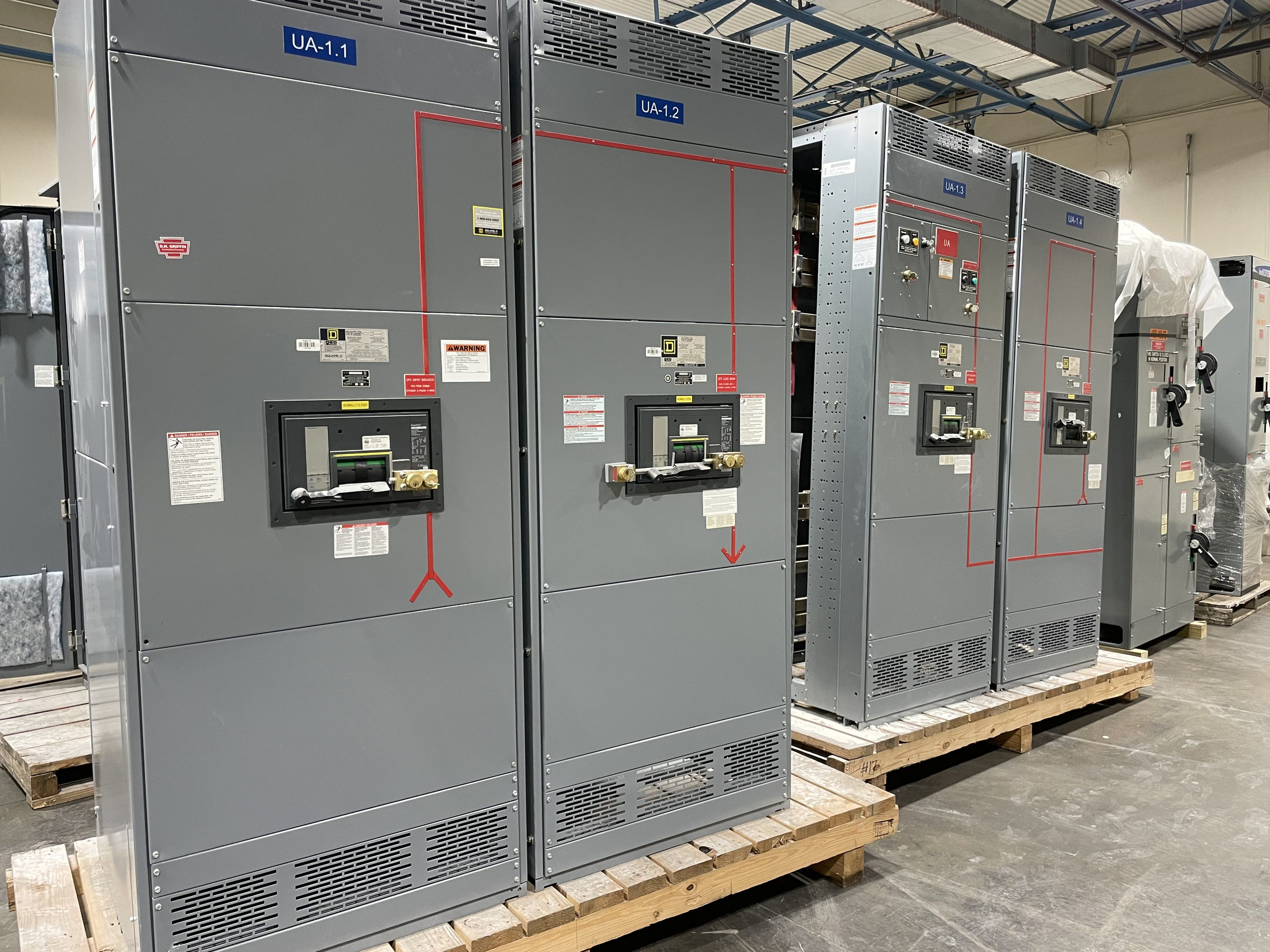
Planning a New Switchgear Installation
This installation and maintenance FAQ helps facility owners, engineers, and contractors plan for new switchgear from early design through routine operation. For Central Texas projects, begin by defining what the equipment must serve, where it will be installed, and how the work fits into the facility schedule. New switchgear is not selected by nameplate voltage alone: the distribution arrangement, connected loads, available fault current, environment, and operating practices all matter. Engage qualified electrical professionals early to establish design criteria and review applicable codes and authorities’ requirements. The answers below identify decisions to resolve with the project team; they are not a substitute for approved drawings or equipment-specific instructions.
What Information Is Needed to Select Equipment?
Provide the design team with the one-line diagram, system voltage, load information, source and feeder details, and available short-circuit data when available. Confirm whether the application calls for a switchboard, low-voltage switchgear, or another equipment type; terminology alone does not establish the correct product. Ratings, bus configuration, protective devices, metering, control needs, and fault withstand capability must match the system and be verified for the specific design. Also identify indoor or outdoor placement, ambient conditions, access clearances, cable or bus connections, and any space constraints. Applicable standards and listing requirements depend on the equipment and assembly. UL 891 applies to suitable switchboard assemblies, not automatically to every switchgear product.
Which Design Choices Should Be Settled Early?
Project-specific choices affect both equipment layout and installation planning. Discuss the number and arrangement of incoming sources, feeder quantities, future provisions, compartment or section arrangement, instrument and control requirements, and the protective-device coordination approach. Confirm conductor entry and termination space, routing, working clearances, ventilation, environmental conditions, and how equipment will be moved into its final location. Any requested rating or enclosure configuration requires review against the application rather than assumption from a typical project. Custom assemblies can be built to specification, but the approved design must define the required features and their interfaces. Resolve conflicts between drawings, specifications, and site conditions before release for production, and route design changes through the responsible project professionals.
How Should Installation Be Coordinated?
Before equipment arrives, coordinate the approved drawings with the site layout, foundation or support details, access route, lifting plan, conduit and cable locations, and connection sequence. The project team should confirm who is responsible for receiving, storage, placement, terminations, grounding, inspection, and final acceptance. Compare delivered equipment and documentation with the approved submittals, and report discrepancies through the project’s established process. Installation must follow the equipment instructions and project requirements, with work performed by qualified personnel under appropriate safety procedures. Do not treat general FAQ guidance as authorization to work on energized equipment. For Central Texas jobs, allow time to align the manufacturer’s submittal and shipment coordination with contractor schedules, site readiness, and any required inspections.
What Testing and Startup Questions Matter?
Testing and startup plans should be set by the project’s qualified electrical professionals and coordinated with the equipment documentation, design, and applicable requirements. Establish which inspections and tests are required, who will perform them, what records must be retained, and how results will be reviewed before energization. Confirm that protective-device settings, metering, controls, interlocks, and labeling correspond to approved project documents. Testing scope varies with equipment type and project conditions; do not assume a standard procedure or acceptance criterion applies to every assembly. Resolve open items before the planned startup window, including any needed corrections or documentation. Energization decisions belong to the responsible professionals and relevant authorities, not to a general FAQ or an unverified assumption.
What Maintenance Is Appropriate After Handover?
Use the manufacturer’s equipment-specific instructions and the facility’s maintenance program to determine inspection intervals and tasks. Keep approved drawings, settings, test reports, and equipment records accessible, and document changes made during operation. Maintenance planning should account for the installed design, operating conditions, service history, and applicable safety procedures; there is no universal schedule or task list suitable for every switchgear lineup. Ask the project team to clarify inspection responsibilities, recordkeeping, and how deficiencies will be evaluated and corrected. For a new-equipment project, practical next steps are to gather the one-line diagram and site constraints, identify the responsible design and installation contacts, list unresolved ratings and options, and request a specification review before finalizing procurement and schedule assumptions.
Project specification checklist
Use this checklist to organize the details for a project-specific review. Final ratings, applicable standards and equipment selections depend on the approved design.
| Item | What to confirm |
|---|---|
| System design basis | Confirm system voltage, one-line arrangement, load data, source details, and available fault-current information. |
| Equipment and ratings | Have qualified professionals verify equipment type, ratings, protective devices, and applicable standards for the specific design. |
| Site and interfaces | Confirm location conditions, clearances, conductor entry, connection details, access route, and installation responsibilities. |
| Submittals and schedule | Align approved drawings, custom requirements, review milestones, site readiness, and shipment coordination with the project schedule. |
| Testing and upkeep | Define project-specific inspections, testing records, startup responsibilities, operating documentation, and maintenance planning. |