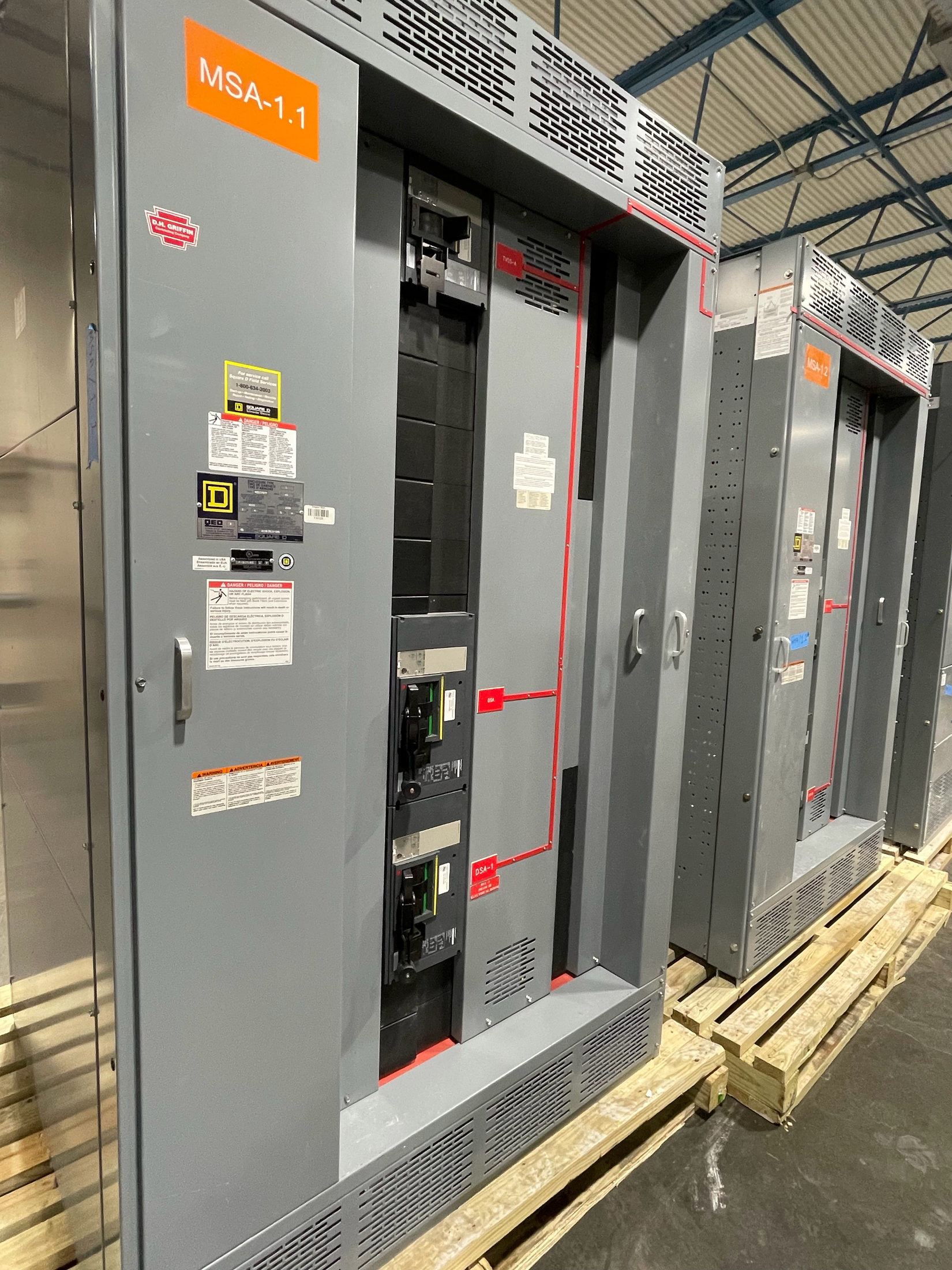
Start with the shipment and its paperwork
When new switchgear arrives, the receiving check is the first chance to compare what reached the site with the order and shipping documents. Before unloading, identify the shipment, note the carrier and delivery time, and confirm the number of packages or sections against the packing list. Check that labels, tags, and equipment descriptions correspond to the project’s approved submittals and receiving plan. A mismatch does not automatically mean the equipment is wrong, but it should be clarified before material is distributed or installation proceeds.
Assign a qualified receiving representative and make sure the delivery area, unloading equipment, access route, and responsible contacts are coordinated in advance. Confirm the shipment’s destination and any handling instructions from the manufacturer or carrier. The project team should decide who can accept delivery, who records exceptions, and who must be notified if the shipment arrives outside the planned receiving window.
Inspect condition before signing
Check the exterior packaging and visible equipment surfaces for punctures, crushing, water exposure, shifted skids, broken seals, or signs of impact. Photograph the shipment from several angles before moving it, then take close-ups of each concern with enough context to identify the affected package or section. Record whether damage is limited to packaging or appears to reach the equipment. Do not assume that an intact crate proves the contents are undamaged, or that a mark on packaging means the equipment itself is unusable.
If damage or an irregularity is visible, follow the carrier’s documentation process and record the exception clearly on delivery paperwork before acknowledging receipt, where procedures allow. Notify the appropriate project contact and equipment supplier promptly. Avoid opening, repositioning, or repairing affected equipment in a way that could obscure evidence or create a safety concern. Follow project procedures and manufacturer instructions, and have qualified personnel determine appropriate inspection and disposition.
Reconcile sections, accessories, and interfaces
Use the packing list and approved project documents to check that all expected switchgear sections, loose-shipped items, and accessories are accounted for. The order may include items packaged separately, so confirm their expected shipment status rather than treating every absent component as a shortage. Compare equipment identifiers and section designations with the one-line diagram, equipment schedule, and submittal drawings. If identifiers, quantities, or descriptions do not agree, document the discrepancy and request clarification before installation planning relies on an assumption.
Receiving is also a useful point to flag interface details that affect staging and installation: section arrangement, joining hardware, conduit or cable-entry provisions, and coordination with the supporting structure or adjacent equipment. These details must match project documents and site conditions; do not infer dimensions, ratings, enclosure suitability, or connection compatibility from appearance alone. Qualified electrical professionals should resolve technical discrepancies against the approved design and applicable project requirements.
Create a clear receiving record
Keep one organized record for each delivery. Include the purchase-order or project reference, equipment identification, package count, date and time received, carrier details, names or roles of receiving personnel, and any shortage or damage observations. Attach dated photographs, copies of delivery receipts and packing lists, and notes describing where the equipment was staged. Record both exceptions and the condition of packages that appear sound; a consistent record helps the project team distinguish verified facts from later recollections.
Route the record to the people responsible for procurement, construction coordination, and equipment review. Track open items with an owner and follow-up status, including missing documentation, possible concealed damage, or unresolved identification differences. Preserve records under the project’s document-control process and retain relevant carrier correspondence. The receiving record supports informed decisions; it does not replace manufacturer guidance, a required inspection, or the project’s technical acceptance process.
Protect equipment while acceptance is pending
After inspection, stage the shipment in a location and orientation consistent with its handling instructions and the site’s storage plan. Protect equipment from moisture, debris, impact, unauthorized access, and conditions identified as unsuitable by the manufacturer or project documents. Keep labels and identification visible, and maintain access for follow-up inspection. If the planned storage area differs from the conditions assumed during project design, raise that issue with the responsible project team rather than improvising storage measures.
Do not energize equipment or treat delivery as evidence that it is ready for installation or operation. Installation readiness may depend on resolution of shipping concerns, confirmation of interfaces, review of approved documents, and completion of specified inspections or tests. Testing scope and applicable requirements depend on the equipment design and project. Qualified electrical professionals should determine the appropriate process, and any work involving electrical hazards must follow established safety procedures.
Resolve exceptions before the next milestone
Before releasing the shipment for installation, close out each receiving discrepancy: confirm whether an item is missing, whether visible damage requires further assessment, and whether the supplied configuration matches the approved project documents. Share photographs and records with the equipment supplier and project decision-makers, then obtain documented direction on next steps. Do not alter equipment, waive a concern, or proceed on an assumed rating or configuration without review by qualified professionals and the parties responsible for project acceptance.
For future deliveries, send the supplier the receiving location, access and unloading constraints, preferred delivery coordination, and the names or roles of site contacts. Confirm the expected package and documentation list, storage arrangements, and the process for reporting exceptions before dispatch. This practical preparation helps the team inspect new switchgear consistently and preserve a useful record from arrival through installation planning, without presuming a particular product capability or site service.
Project specification checklist
Use this checklist to organize the details for a project-specific review. Final ratings, applicable standards and equipment selections depend on the approved design.
| Item | What to confirm |
|---|---|
| Shipment identification | Match package labels, section identifiers, and quantities to the order, packing list, and approved project documents. |
| Condition evidence | Record packaging and equipment observations with dated photographs before moving or unpacking affected items. |
| Delivery exceptions | Document damage, shortages, or discrepancies on receiving records and follow applicable carrier and project procedures. |
| Site interfaces | Confirm staging, access, unloading, section arrangement, and installation interfaces against project documents and site conditions. |
| Disposition and readiness | Obtain qualified review of unresolved concerns and confirm required inspections or tests before installation or operation. |