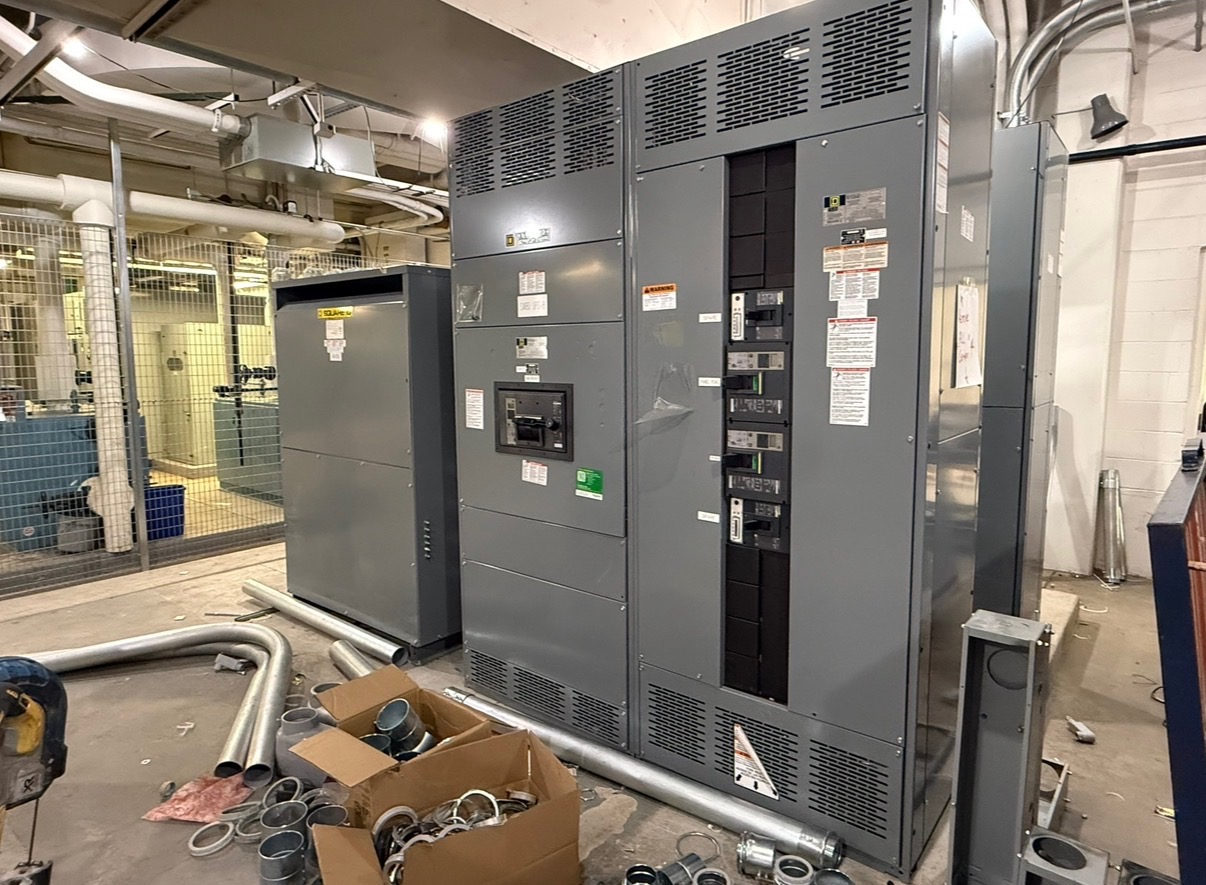
A Submittal Turns the Quote Into a Reviewable Design
A switchgear submittal is the project-specific information package used to review the proposed new equipment before it is released for manufacture. For an owner, engineer, contractor, or purchasing team evaluating pricing and quote details, it helps answer a practical question: does the quoted configuration align with the electrical design and project requirements? The package is not automatically a complete construction set, nor does every project require the same documents. Its contents should be agreed during quotation and refined against the approved specifications, one-lines, and procurement requirements.
A useful package makes assumptions visible: what equipment is included, which interfaces are by others, and what remains subject to engineering review. That clarity helps reviewers compare the proposed scope with the project intent without treating preliminary information as final installation direction.
Drawings Show Arrangement, Connections, and Interfaces
Depending on the equipment and agreed scope, drawings may include a general arrangement, front elevation, plan or side views, and a one-line or elementary diagram. These documents help reviewers assess equipment lineup, section sequence, access and connection locations, and the relationship between incoming and outgoing circuits. They should be checked against the project’s available room dimensions, cable or bus routing, and the electrical drawings—not used as a substitute for field verification or installation planning.
Confirm what drawing formats and revision stages are expected, and identify who supplies architectural, structural, conduit, and adjacent-equipment information. Project-specific details such as entry direction, transition sections, metering provisions, or control interfaces should be documented only when established by the design. Unresolved dimensions or interfaces belong on a review comment list, not in an assumed final configuration.
Component Data Connects Selection to the Specification
Component data may identify the proposed devices and describe their relevant characteristics, such as breaker or switch type, protective functions, metering, control components, and accessories. The precise content depends on the equipment design and agreed submittal scope. Reviewers should compare this information with the project specification, one-line, protection requirements, and control documents to verify that the proposed selections address the intended application.
Electrical ratings are application-specific. The required voltage, continuous current, short-circuit withstand or interrupting requirements, and other characteristics must be established from project documents and verified by qualified electrical professionals. Do not infer suitability from a product family name or a partial data sheet. Applicable standards and any requested listing must also be confirmed for the particular assembly; UL 891 applies to suitable switchboards, not automatically to every switchgear type.
Agree on the Document Set Before Comparing Quotes
Quotes are easier to compare when the requested documents are explicit. The parties can agree whether the package includes outline and connection drawings, bills of material or component schedules, device data sheets, control schematics, and other records required for review. They should also establish the intended review cycle, submittal milestones, and whether revised documents will reflect accepted comments. Not every project needs every document, and a document’s presence should not be taken to mean that an unrelated service or deliverable is included.
For pricing, distinguish the equipment scope from optional or project-specific documentation. Ask whether drawings are preliminary or approval-stage, what information is needed before they can be prepared, and how changes after approval are handled. This makes the quote more meaningful and reduces the risk that a reviewer expects documents that were never included or assumes an unverified design choice.
Provide Inputs for Design and Coordination
A complete request for quotation gives the manufacturer a basis for developing a reviewable design. Useful inputs can include the latest one-line diagram, equipment schedule, electrical specifications, available fault-current information, protection and metering requirements, control narratives, and relevant site constraints. Identify the source and revision of each document. If information is preliminary or missing, flag it so the quotation can state assumptions rather than quietly treating an unknown as settled.
Interfaces deserve particular attention: utility or upstream connections, downstream feeders, transformers, generators, transfer equipment, communications, and building systems may affect the arrangement or controls. Clarify who provides interface data and who reviews it. Coordination should include relevant electrical professionals and authorities, with applicable requirements determined for the specific design and jurisdiction. No submittal can replace their project review or approval.
Review, Testing, and Procurement Next Steps
A practical review starts by checking scope, drawing revisions, ratings, device selections, interfaces, and all noted exceptions against the contract documents. Return consolidated comments through the agreed project process, identify conflicts clearly, and resolve open decisions before approval for manufacture. If testing records or inspection documentation are required, state the requested scope and acceptance criteria in the procurement documents; do not assume a particular test, standard, or report is included without confirmation.
Before requesting a quote, send the current project documents, list required submittal deliverables, and note decision deadlines or coordination dependencies. Ask the manufacturer to identify assumptions, exclusions, and information still needed, then confirm the agreed document set in writing. A US-built new switchgear assembly can be custom configured to specification and shipped nationwide, while lead time depends on the project. Final selection and approval remain subject to specification review by qualified electrical professionals and relevant authorities.
Project specification checklist
Use this checklist to organize the details for a project-specific review. Final ratings, applicable standards and equipment selections depend on the approved design.
| Item | What to confirm |
|---|---|
| Design basis | Confirm current one-line, specifications, equipment schedule, and document revisions. |
| Electrical ratings | Verify project-required voltage, current, fault-duty, and protection characteristics. |
| Drawing scope | Agree on drawing types, revision stages, formats, and review cycles. |
| Component documentation | Specify device data and schedules needed to assess selections against requirements. |
| Interfaces and testing | Identify responsible parties, interface information, requested tests, and documentation. |
| Standards and listing | Confirm applicability to the specific assembly and project; do not assume a listing. |