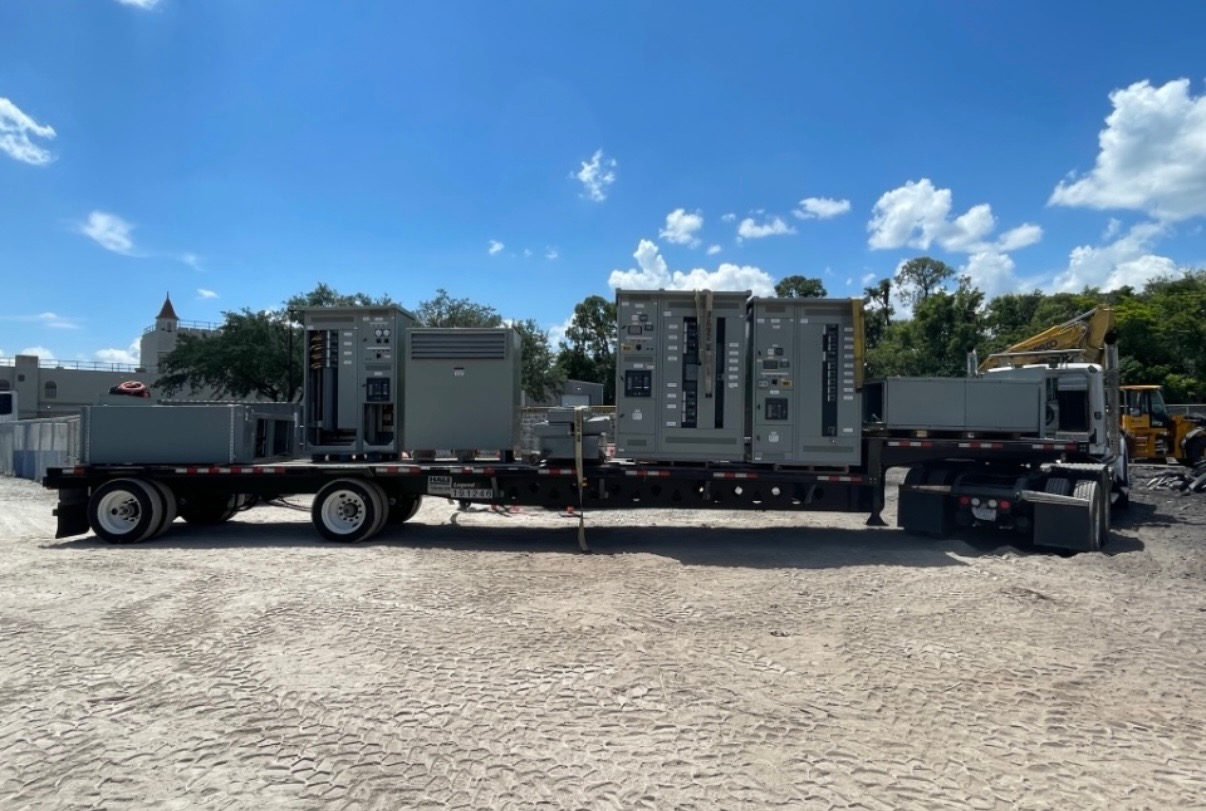
Does UL 891 apply to every switchgear product?
No. UL 891 is a standard for switchboards, and its applicability depends on the equipment’s design and intended use. The phrase “switchgear” is often used broadly, but a project may call for a switchboard, low-voltage switchgear, medium-voltage equipment, or another assembly. These products are not interchangeable for standards purposes. A reference to UL 891 in a specification should therefore be checked against the actual equipment being furnished, not treated as a blanket requirement for every product described as switchgear.
For a new equipment order, the starting point is to define the assembly and its role in the electrical system. The applicable standards and evaluation path depend on design details and project requirements. A UL 891 designation should not be assumed for medium-voltage or high-voltage equipment, or for an assembly that does not fall within the standard’s scope. Qualified electrical professionals and relevant authorities should review the project requirements before the equipment basis is finalized.
Define the equipment and its role in the system
Standards selection begins with what the equipment must do: distribute power, provide control, protect circuits, connect sources, or serve as an interface between system sections. The one-line diagram, equipment schedule, sequence of operation, and project specifications help distinguish the required product type. System voltage and frequency, phase configuration, incoming sources, load arrangement, and available fault-current information also inform design review; none should be inferred from a general product label.
The installation context matters as well. Confirm whether the assembly is intended for indoor or outdoor placement, the environmental conditions, access and working clearances, and how it will connect to upstream and downstream equipment. Enclosure requirements, bus arrangement, protective devices, metering, and control features must be evaluated for the specific design. These inputs help determine which standards are relevant and what evidence of conformity the project requires. They do not establish a rating or listing without review.
Treat ratings and construction as project decisions
A standards discussion should not substitute for selecting and verifying equipment ratings. The design team needs to establish operating voltage, continuous current requirements, short-circuit withstand or interrupting requirements as applicable, and coordination with the protection scheme. Those values must be supported by project studies and the intended system configuration. An assembly’s suitability depends on the complete design and its components, not simply on a familiar standard number or a catalog description.
Construction choices can affect both product definition and evaluation. These may include bus configuration, compartment arrangement, barriers, instrument transformers, protective devices, control wiring, and integration with other assemblies. Changes to a specified configuration should be reviewed for their effect on compliance, performance, and interfaces. The manufacturer can develop custom new assemblies to specification, but the project must first establish which requirements govern and confirm that the proposed design addresses them.
Review interfaces and coordination requirements
Equipment standards are only one part of a coordinated project. Confirm incoming and outgoing conductor arrangements, connection points, grounding and bonding approach, control and communications interfaces, and coordination with transformers, generators, transfer equipment, or other system components where present. Project documents should identify responsibility for each interface and show any required interconnection details. Incomplete interface information can lead to mismatched layouts or control expectations even when the equipment type has been correctly identified.
Protection and system coordination also deserve explicit review. The design team should determine how protective devices relate to available fault current, downstream equipment, and the intended operating sequence. Required studies, settings, documentation, and acceptance activities should be assigned to the appropriate project participants. These decisions depend on the system and authority requirements; they cannot be settled by applying UL 891 universally or by assuming that one standard covers every connected component.
Confirm testing and compliance evidence before ordering
Ask the project engineer or specification authority to identify the required standard, edition if specified, and the form of compliance evidence expected for the exact assembly. For suitable switchboard assemblies, UL 891 may be relevant; it does not automatically apply to every switchgear product or every configuration. Other equipment types may follow different applicable standards. The manufacturer’s proposed equipment description and compliance documentation should be reviewed against the contract documents before release for production.
Clarify what testing or inspection is required, who performs it, what records must be provided, and whether project-specific witness or acceptance steps apply. Do not assume a particular listing, certification, test program, or authority acceptance from a product name alone. Applicable requirements depend on design and project scope. Qualified electrical professionals should resolve conflicts among drawings, specifications, and authority requirements before procurement, so the order reflects an agreed technical basis rather than an unresolved standards reference.
Prepare a clear basis for new-equipment procurement
Before requesting a proposal for new switchgear, assemble the current one-line diagram, equipment schedule, specifications, system study inputs, interface requirements, and any authority comments. Mark the requested equipment type and identify the standards language that needs confirmation. Include required ratings, environmental and enclosure conditions, protective and control functions, connection details, and documentation or testing expectations. Where information is incomplete, list it as an open decision for the engineer and manufacturer to resolve rather than filling in an assumed value.
A practical next step is a documented submittal review: compare the proposed assembly, ratings, construction, interfaces, and compliance evidence with the approved project basis. Confirm deviations and their effects before authorizing production. A US manufacturer offering custom assemblies can use the specification to define the proposed design, with lead time determined by project requirements. Final suitability remains subject to qualified engineering review and applicable authority requirements; a standards label alone is not a complete procurement decision.
Project specification checklist
Use this checklist to organize the details for a project-specific review. Final ratings, applicable standards and equipment selections depend on the approved design.
| Item | What to confirm |
|---|---|
| Equipment classification | Confirm whether the required assembly is a switchboard, low-voltage switchgear, medium-voltage equipment, or another product type. |
| Standards basis | Identify applicable standards and required compliance evidence for the specific design and project; do not assume UL 891 applies. |
| System inputs | Provide verified voltage, current, available fault-current, protection, and operating-sequence requirements for engineering review. |
| Interfaces and environment | Document connections, grounding, controls, adjacent equipment, location conditions, and enclosure requirements. |
| Testing and documentation | Specify required tests, inspections, records, witness points, and acceptance responsibilities. |