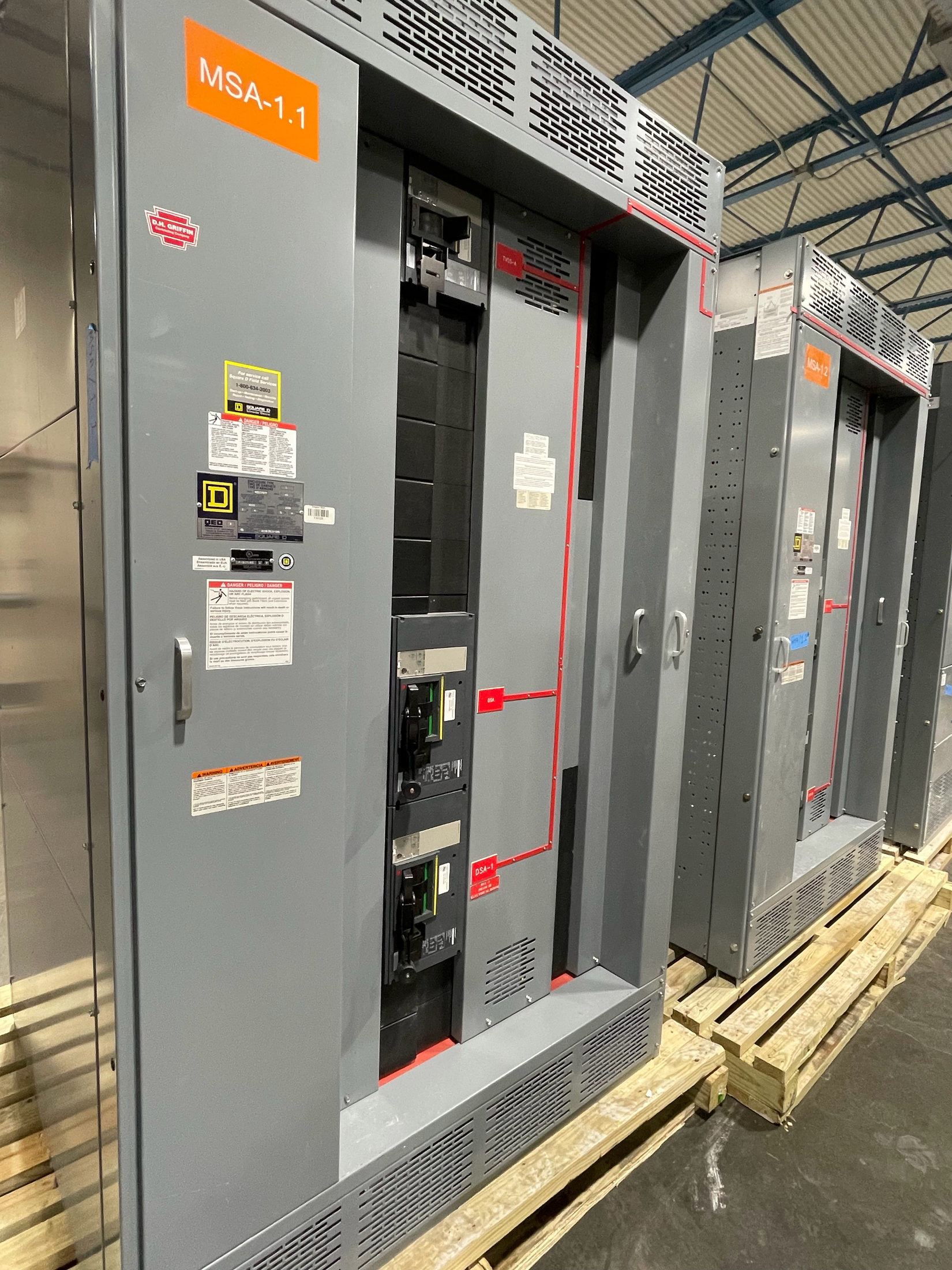
What a factory witness test means
A factory witness test is an agreed opportunity for designated customer or project representatives to observe specified inspections or tests on new switchgear during manufacture or before shipment. The term does not, by itself, define a universal test package, prove that every possible operating condition has been tested, or guarantee a particular listing. The purchase specification, approved drawings, applicable standards, and project quality requirements establish what is examined and how results are judged.
For a purchaser, the test can clarify whether the equipment and its documentation align with the approved design before the assembly proceeds to the next project milestone. It is distinct from commissioning at the installation site. A witness test also does not transfer responsibility for design review or acceptance from the project’s qualified electrical professionals and other designated authorities.
Agree observers and responsibilities in advance
Identify the people entitled or expected to attend: this may include the purchaser’s electrical representative, engineer, owner, quality representative, or other parties named in the project documents. Confirm whether attendance is in person or remote, who can make technical decisions, and who records comments. The manufacturer’s test personnel conduct the agreed procedure; observers review the stated evidence and raise questions within the defined scope.
Set expectations for notice, attendee limits, access, confidentiality, and any required safety orientation. Agree how the test will proceed if an observer cannot attend, arrives late, or requests a hold point. The contract or quality plan should say whether the test may continue, must be rescheduled, or can proceed after notice. Do not assume that attendance or an observer’s signature alone constitutes final project acceptance.
Define the procedure against project inputs
The test plan should reference the equipment identification, approved drawings and revisions, purchase specification, applicable standards, and any project inspection and test plan. It should identify each activity, the equipment or circuit involved, the method, required prerequisites, expected evidence, and pass, fail, or hold criteria. Applicable standards depend on the equipment design and project; UL 891 applies to suitable switchboard assemblies, not automatically to every switchgear product or voltage class.
Before the test, reconcile open design questions that could affect results, including the specified application, system voltage, ratings, protective devices, metering, control power, communications, and enclosure requirements. These are project inputs, not assumptions about universal product capability. Confirm which interfaces are represented in the factory test and which depend on external devices, field wiring, utility requirements, or site conditions that cannot be fully verified at the factory.
Choose checks that match the assembly
The agreed scope may include visual and dimensional examination, review of nameplates and component identification, mechanical operation, wiring checks, or specified electrical tests. Which checks apply depends on the new assembly, its design, the contract documents, and relevant standards. A test plan should distinguish routine production checks from additional witness activities and should state whether an observation is a demonstration, measurement, records review, or hold point.
For custom assemblies, resolve project-specific details before setting acceptance criteria: confirm drawing revisions, device and accessory selections, control sequences, terminal points, labeling, and interfaces to other equipment. If a requested demonstration requires external controls, communications equipment, or a simulated signal, document the test setup and its limits. Never treat a simulated condition as proof of a complete installed-system function unless the agreed method establishes that conclusion.
Coordinate timing, changes, and acceptance records
Witness timing should be coordinated with the manufacturer’s production and test schedule, the purchaser’s review period, and any shipping or project hold points. Lead times and test availability are project-dependent, so establish the required notice and decision dates during procurement. Identify who approves the procedure and how questions, nonconformances, retests, or requested changes are logged, evaluated, and closed. A design change after drawing approval may require revised documentation or a changed test scope.
Define the acceptance record before testing. It may include the approved procedure, equipment identifiers, test results, instruments or methods where relevant, observed exceptions, corrective actions, retest evidence, and attendee acknowledgments. Specify who issues and reviews the record and whether acceptance is conditional on closing listed items. Keep the record with the project’s controlled documentation; a witness report should describe what was actually performed rather than imply tests beyond its scope.
Practical steps before ordering new switchgear
When requesting a factory witness test for new switchgear, provide the manufacturer with the project specification, one-line diagram, equipment schedule, applicable standards, approved drawing requirements, and quality or inspection plan. State the desired observers, witness points, documentation format, review deadlines, and any required acceptance signatures. Ask the manufacturer to identify proposed procedures and exclusions for review before procurement commitments are finalized.
Resolve who has authority to approve deviations and what happens if a result does not meet an agreed criterion. Confirm whether the test is a contractual hold point and whether shipment depends on written release. For a US-built custom assembly using all-American components, those sourcing details do not replace technical verification or determine the test scope. Have qualified electrical professionals review the design, procedure, and records, and coordinate any required decisions with the relevant project authorities.
Project specification checklist
Use this checklist to organize the details for a project-specific review. Final ratings, applicable standards and equipment selections depend on the approved design.
| Item | What to confirm |
|---|---|
| Witness participants | Confirm named observer roles, attendance method, decision authority, and the procedure if an observer is unavailable. |
| Test basis | Identify approved drawing revisions, purchase requirements, applicable standards, and project inspection-plan references. |
| Scope and criteria | List each witness activity, prerequisites, pass or hold criteria, exclusions, and any simulated interfaces. |
| Timing and hold points | Agree notice, review, scheduling, shipment-release conditions, and how changes or retests are handled. |
| Acceptance documentation | Specify required results, exceptions, corrective-action evidence, attendee acknowledgments, and record approval. |