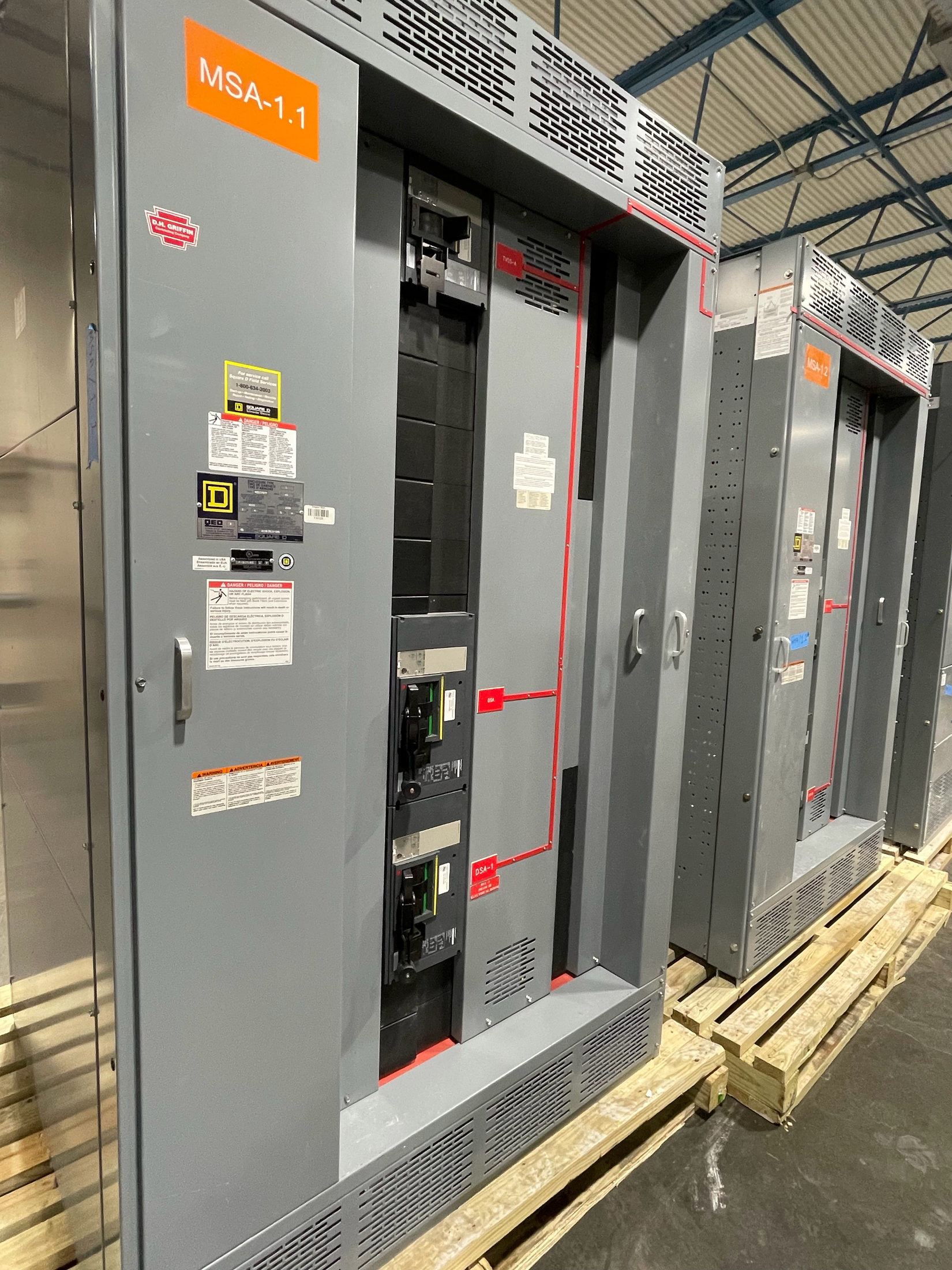
A practical glossary for switchgear projects
Electrical distribution terms can sound interchangeable even when they describe different equipment or functions. This switchgear glossary defines common language used in early planning, equipment specifications, and discussions among owners, engineers, contractors, and manufacturers. The definitions are starting points, not a substitute for the project documents or professional design review.
For a Central Texas project, the right equipment depends on the electrical system, operating needs, installation environment, and applicable requirements—not on a term alone. Use the entries below to frame questions, then compare answers against the one-line diagram, load information, and specifications. Any proposed new switchgear configuration and ratings should be reviewed by qualified electrical professionals and relevant authorities before procurement.
Switchgear, switchboards, and distribution equipment
Switchgear is an assembly of electrical devices used to control, protect, and isolate circuits. The term can refer to equipment across different voltage classes and designs, so it does not establish a particular rating, construction, or applicable standard by itself. Confirm the equipment’s intended role and system characteristics in the project documents.
A switchboard is a type of low-voltage distribution assembly, commonly arranged to distribute power from an incoming source to outgoing circuits. Switchboards and switchgear are not automatically interchangeable terms. UL 891 applies to suitable switchboard assemblies; it should not be assumed to apply to every switchgear product or to medium- or high-voltage equipment. The design and applicable standards must be confirmed for the specific assembly.
Voltage, current, and available fault current
Voltage describes the electrical potential of a system; current describes the flow of electric charge. Equipment must be selected for the system voltage and expected operating current, but those values alone do not establish that an assembly is suitable. Confirm system configuration, load requirements, and any project-specific operating conditions with the engineer of record.
Available fault current is the prospective current that could flow at a point in the system during a fault. Short-circuit withstand or interrupting capabilities are equipment-specific and must be evaluated against the project’s documented fault conditions and protection scheme. Do not infer suitability from a general product category or a single rating. The responsible electrical professional should verify the required ratings and coordination for the intended installation.
Bus, feeder, and overcurrent protection
A bus, or busbar, is a conductive path within an assembly that connects incoming power to distribution circuits. A feeder carries power from a source or distribution point toward downstream equipment. The terms describe different parts of an electrical system; neither indicates conductor size, capacity, or protection without the design details.
Overcurrent protection is intended to respond to current above a defined operating condition, including overloads or faults, according to the protective device and system design. Breakers and fuses have distinct characteristics, and device selection affects coordination and continuity of service. Confirm feeder destinations, protective-device requirements, available fault current, and coordination objectives in the project specifications rather than assuming a standard arrangement will fit.
Enclosure, lineup, and service conditions
An enclosure houses electrical components and helps address installation conditions, access, and protection from environmental influences. Its construction and type must be selected for the actual location and applicable requirements; no enclosure type is universally appropriate. Document whether the equipment will be indoors or outdoors and identify relevant exposure, space, access, and maintenance constraints for design review.
A lineup is the assembled arrangement of equipment sections and their internal connections. The required lineup depends on incoming and outgoing circuits, future provisions, physical clearances, and the project’s operating plan. Confirm layout and interfaces with adjacent equipment, including cable or bus connections, before finalizing drawings. For a Central Texas installation, coordinate site access, receiving, handling, and delivery timing with the project team; these logistics do not determine the electrical design.
From glossary terms to a project-ready specification
Use these definitions to review the one-line diagram and identify unresolved choices: equipment type, system voltage, load and feeder information, fault-current data, protective-device approach, enclosure conditions, and connection interfaces. Also clarify whether the project needs a switchboard assembly suitable for UL 891 or another equipment type governed by different applicable standards. Listing and standards applicability depend on the assembly and design; never presume them from terminology.
Before requesting a proposal for new switchgear, assemble current drawings, specifications, site constraints, required submittals, and the project schedule. Ask the manufacturer to identify assumptions, exclusions, open technical questions, and expected lead time for the proposed configuration. A US manufacturer using all-American components can develop custom assemblies to specification and ship nationwide; lead time is project-dependent. Have qualified electrical professionals and relevant authorities review the design, ratings, coordination, and applicable requirements before release.
Project specification checklist
Use this checklist to organize the details for a project-specific review. Final ratings, applicable standards and equipment selections depend on the approved design.
| Item | What to confirm |
|---|---|
| System information | Confirm system voltage, configuration, load data, and the equipment’s intended distribution role. |
| Fault and protection data | Provide documented available fault current and define protective-device and coordination requirements for professional review. |
| Equipment standard | Identify the intended equipment type and confirm which standards or listing requirements apply to that specific assembly. |
| Installation conditions | Document indoor or outdoor location, enclosure needs, access, clearances, and connection interfaces. |
| Submittals and schedule | Confirm required drawings, review milestones, delivery coordination, and project-specific lead-time expectations. |