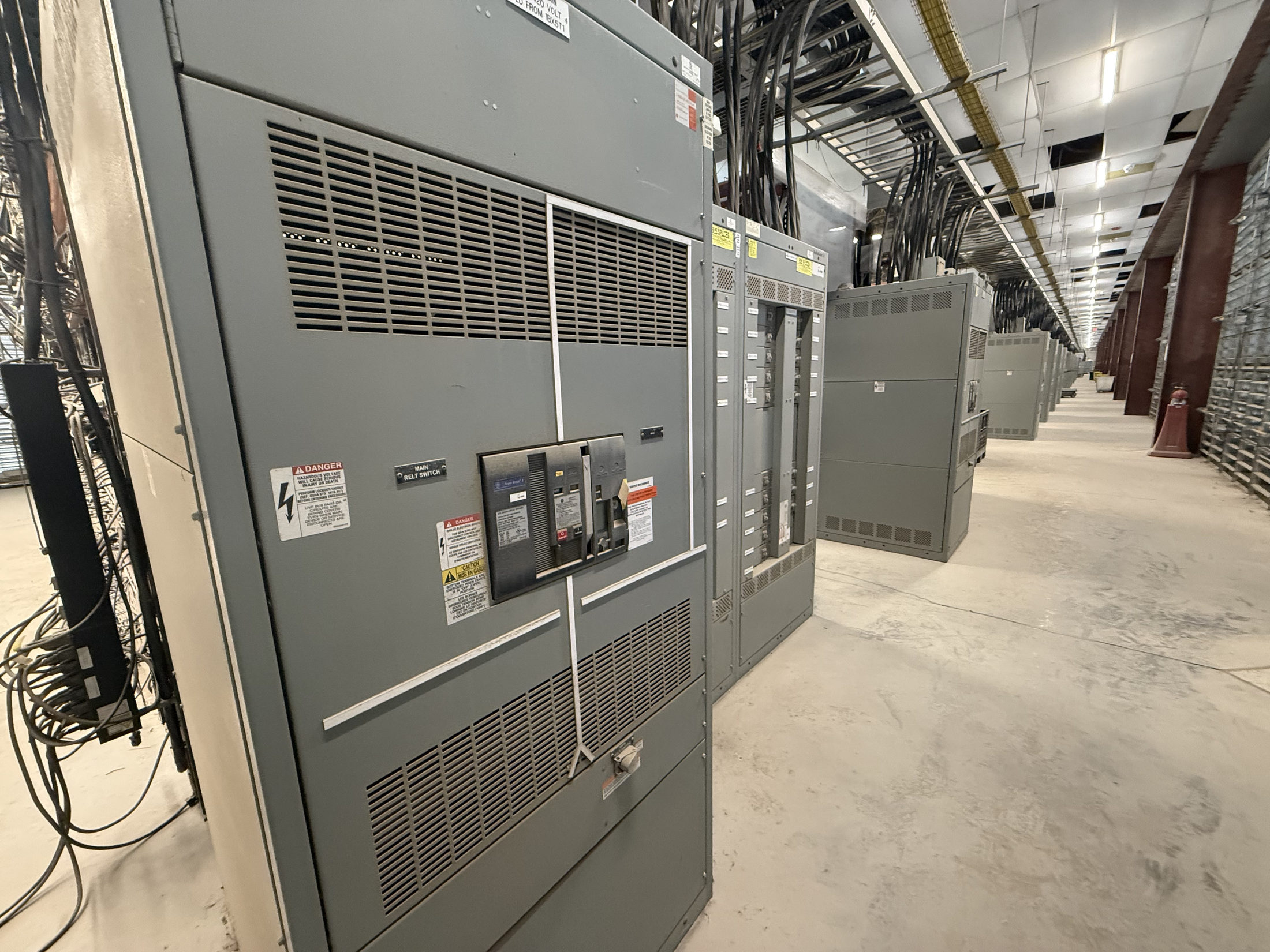
Treat doors and covers as functional parts of the assembly
In new switchgear, a door or cover is more than a sheet-metal closure. Its layout affects which components can be reached, how conductors and devices are protected, and whether inspection or maintenance can be performed as intended. Fabricated door and cover design should therefore begin with the assembly arrangement and the people who will operate or service it—not with a preferred hinge or latch alone.
The design review should distinguish hinged doors from removable covers and identify each panel’s purpose, access frequency, and relationship to adjacent sections. A control compartment door, for example, has different access needs from a barrier that is removed only for qualified maintenance. The equipment design and project requirements determine appropriate construction; no single door arrangement is suitable for every switchgear application.
Establish access boundaries and service tasks
List the tasks expected at each opening: routine observation, control operation, inspection, adjustment, or access for planned maintenance. Identify which devices and terminals must be visible or reachable, and which areas must remain separated by barriers. Drawings should show the opening direction, clear working area, and any obstruction from nearby walls, equipment, cable routes, or other doors. These inputs help prevent a panel that technically opens but cannot be used in the installed arrangement.
Confirm who is authorized to access each compartment and what project rules govern access. Door and cover geometry must support the equipment’s intended protective boundaries and operating procedures. Do not assume that opening a door makes energized access acceptable. The assembly design, applicable safety requirements, and project instructions must be reviewed by qualified electrical professionals; access planning is not a substitute for safe work practices or required isolation procedures.
Select hinges for load, swing, and surroundings
Hinge selection depends on the door’s dimensions, material, mass, mounted devices, expected use, and the structure supporting it. The design team should check hinge placement, attachment method, door alignment, swing angle, and whether the open door could interfere with adjacent equipment or a room feature. Heavy devices mounted on a door can change its loading and alignment needs, so their locations and weights should be established before fabrication details are finalized.
Environmental exposure and the specified enclosure construction also matter. Confirm project requirements for corrosion protection, finish, gasketing, and any applicable enclosure or environmental classification rather than inferring suitability from appearance. Where a door must be removable or restrained in an open position, make that requirement explicit. Hinge type and detailing should be selected for the particular assembly and verified during engineering review, not treated as a universal switchgear feature.
Coordinate latches, handles, and interlocks
Latch and handle decisions should reflect how often the opening is used, how it is secured, and whether access is restricted. Record the required operating method, keying or locking expectations, and any project-specific access-control interface. If an interlock or other mechanical relationship is required, document its intended function and the equipment conditions it must address. These are design inputs for the assembly, not details to leave for field interpretation.
Review latch placement against door stiffness, gasketing, seams, and adjacent hardware so closure is consistent along the intended perimeter. Confirm that handles and operating components do not obstruct controls, labels, cable entry, or the movement of neighboring doors. Any interlock arrangement must be evaluated as part of the complete design and applicable project requirements. Do not infer an interlock’s safety function from the presence of a latch or handle; the design documentation should state what is required and how it will be checked.
Define covers, seams, and protective interfaces
For each cover, specify whether it is intended to be hinged, removable, or fixed, and identify the service task that justifies that choice. Show fastener locations, overlap or seam details, edge treatment, and any required barrier relationship to internal parts. A removable cover may simplify planned access, while a hinged panel may suit repeated use, but either choice depends on the assembly layout and the project’s access and protection requirements.
Coordinate openings with device cutouts, wiring, bus or conductor clearances, cable entry, ventilation provisions, and the enclosure structure. Confirm whether the cover supports a gasket, shield, label, or other interface, and how that feature affects fit and access. UL 891 applies to suitable switchboard assemblies where relevant; it does not automatically apply to every switchgear product or component. Applicable standards and any listing requirements must be established for the specific design and project.
Resolve interfaces before fabrication release
Useful design inputs include the equipment arrangement, compartment boundaries, device schedules, control and wiring diagrams, installation orientation, room clearances, cable-entry plan, and specified environmental conditions. Provide door and cover drawings with dimensions, material and finish requirements, hardware locations, openings, and notes on removable parts. Identify interfaces with adjacent sections or customer-supplied equipment, including any restrictions on door swing or access. Early review helps uncover conflicts before the design is released for manufacture.
Coordinate revisions among the equipment designer, project engineer, and other responsible parties. Confirm that door-mounted devices, wiring routes, labels, and hardware remain consistent across drawings and the final assembly configuration. The manufacturer builds new equipment in the USA using all-American components and can develop custom assemblies to specification; project scope and applicable requirements still need review. Avoid treating a preliminary layout as approval for fabrication until responsible reviewers have resolved design questions.
Review samples, checks, and procurement details
Before ordering, submit the current equipment schedule, approved arrangement drawings, access requirements, and project specifications for review. Ask the design team to identify door and cover types, hinge and latch details, opening direction, hardware interfaces, finish expectations, and any required interlock or protective feature. Also confirm drawing approval responsibilities, revision control, and the intended inspection or documentation points. Lead time depends on the project, so procurement planning should use the reviewed scope rather than assume a standard configuration or delivery interval.
Where appropriate to the assembly and agreed quality plan, fabrication checks can verify dimensions, alignment, operation, closure, and fit of hardware and cutouts. Confirm what will be examined and documented before release; no particular test, listing, or acceptance result should be presumed without project verification. For a practical next step, mark each opening on the latest arrangement drawing, describe its use and access limits, and send that information with the applicable specifications for qualified engineering review.
Project specification checklist
Use this checklist to organize the details for a project-specific review. Final ratings, applicable standards and equipment selections depend on the approved design.
| Item | What to confirm |
|---|---|
| Opening purpose | Confirm the devices, tasks, access frequency, and compartment boundaries associated with each door or cover. |
| Swing and clearances | Document opening direction, required swing, nearby obstructions, and installed access space. |
| Hardware requirements | Specify hinge loading considerations, latch or locking expectations, and any defined interlock function. |
| Panel interfaces | Coordinate cutouts, wiring, labels, gaskets, barriers, cable entry, and adjacent-section connections. |
| Finish and environment | Identify project conditions and the specified finish or enclosure requirements; verify suitability for the design. |
| Review and inspection | Set drawing approval, revision control, and agreed fabrication checks before authorizing manufacture. |