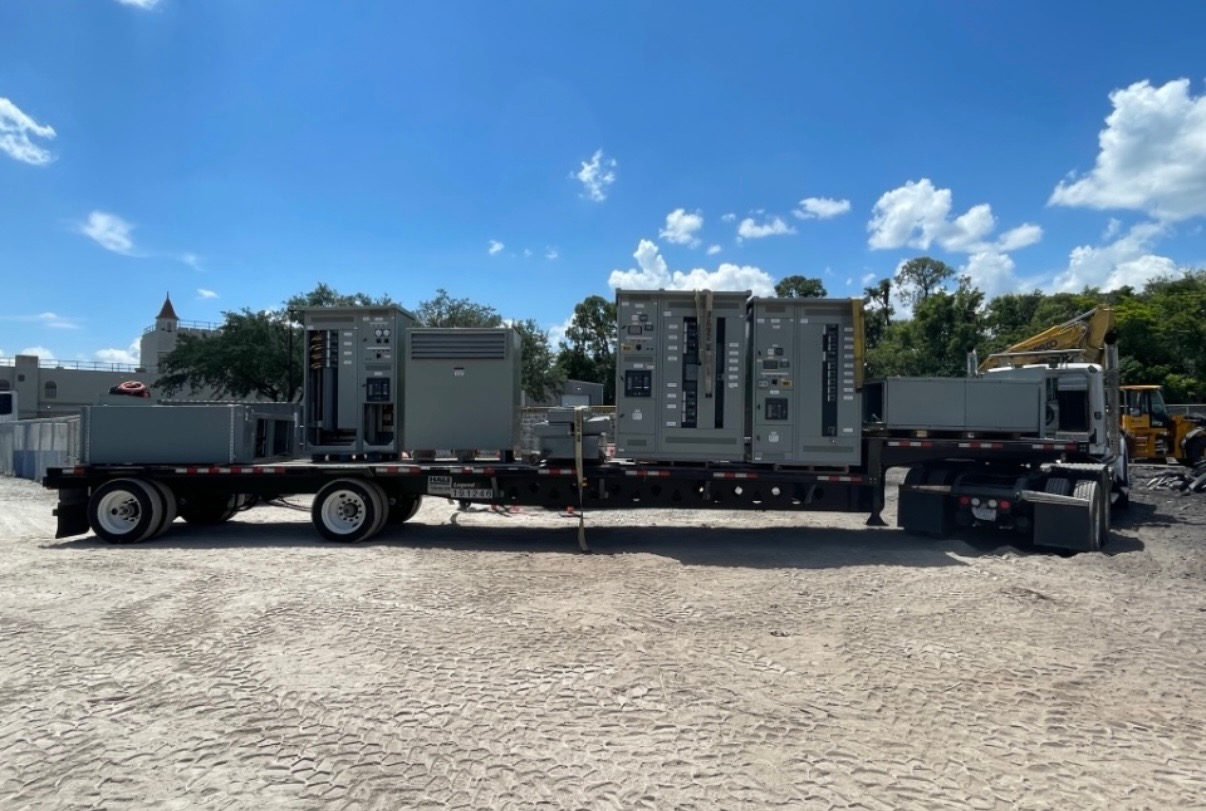
Why Condensation Matters Inside Switchgear Enclosures
Condensation and space heaters are part of environmental design for new switchgear, not a substitute for selecting an enclosure suited to its location. Moisture can form when humid air contacts internal surfaces cooler than the air’s dew point. Repeated wetting may contribute to corrosion, insulation contamination, tracking, or unreliable control components. Risk depends on the installation environment and operating cycle, including temperature swings, humidity, ventilation, and whether equipment is energized continuously or experiences long periods of shutdown.
The design discussion should begin with the conditions the equipment will face, rather than assuming every enclosure needs a heater or that a heater alone resolves moisture concerns. Identify indoor or outdoor placement, exposure to weather or washdown, seasonal conditions, nearby heat sources, and likely periods without power. A qualified electrical professional should assess how these conditions affect the equipment design and applicable project requirements.
Gather Site Conditions Before Selecting Heater Power
Heater power cannot be responsibly selected from enclosure dimensions alone. Relevant inputs include enclosure size and construction, expected ambient temperature and humidity, installation location, internal heat sources, air leakage or ventilation, thermal insulation, and the temperature differential the design is intended to maintain. The expected supply voltage and available control power also matter. For equipment with multiple compartments, determine whether each space has distinct exposure or thermal behavior.
Provide the equipment supplier with environmental design criteria and the project’s electrical drawings or control-power requirements. Include any preferred temperature or humidity control strategy, operating modes, and known power interruptions. These inputs allow the design team to review heater placement and power as part of the complete assembly, while avoiding unsupported assumptions about a universal wattage, voltage, or enclosure capability. Final selection remains subject to project-specific engineering review.
Choose a Control Strategy That Fits Operating Conditions
A space heater may be controlled by a thermostat, a humidistat, or a combined approach, depending on the design objective and environmental conditions. A thermostat responds to temperature; a humidistat responds to relative humidity. Control setpoints, sensor location, and switching behavior should be chosen with enclosure conditions in mind. A sensor placed where it does not represent the protected space may allow cold surfaces or damp compartments to remain unaddressed.
Discuss whether heater operation should be independent of equipment operating status, whether an alarm or indication is needed, and how the control circuit will be powered and protected. Confirm how the control scheme behaves during startup, shutdown, and loss of auxiliary power. Heater controls should not be treated as a guaranteed moisture-prevention system: they require appropriate design, installation, and maintenance, and cannot correct water entry or unsuitable environmental exposure by themselves.
Coordinate Heater Placement, Wiring, and Enclosure Design
Heater location affects heat distribution, clearances, wiring routes, and access for inspection or replacement. The design should consider nearby conductors and components, barriers between compartments, airflow, and potential hot spots. Where more than one compartment is involved, the project team should decide whether separate heaters and controls are appropriate rather than presuming one heat source will condition the entire assembly evenly.
Coordinate the heater circuit with the switchgear drawings, control-power source, protective devices, terminal requirements, and any monitoring or building-management interfaces. Confirm what indication or alarm contacts are required and who will receive those signals. Enclosure selection and environmental protection must be reviewed together with heater design; adding heat does not establish an enclosure rating or make an installation suitable for every site condition. Applicable standards and design requirements depend on the assembly and project.
Verify the Environmental Design During Project Review
Before release for manufacture, review the heater schedule, control narrative, enclosure arrangement, electrical diagrams, and project environmental criteria as a coordinated set. Resolve differences between specified control voltage, available auxiliary power, sensor locations, and interface expectations. Confirm whether the design requires status indication, alarm contacts, or a defined response to a failed heater or control device. These details help prevent late changes and clarify what the delivered assembly is intended to do.
Testing and inspection provisions should be established in project documents and matched to the equipment design; do not presume a particular heater test, certification, or enclosure rating applies universally. Qualified professionals should define appropriate verification and acceptance criteria, along with any site checks required by the project. Work on energized equipment is not an appropriate means of verifying heater operation; use approved procedures and qualified personnel for inspection and testing.
Prepare a Clear Procurement Package for New Switchgear
For a useful quotation and design review, provide the one-line diagram, equipment configuration, environmental conditions, enclosure requirements, control-power details, and desired heater-control interfaces. State whether the project calls for temperature control, humidity control, alarms, or monitoring, and identify relevant operating scenarios such as seasonal shutdowns. Note any project-specific standards or acceptance requirements for review rather than assuming a listing or design feature applies to every assembly.
A US manufacturer building new switchgear with all-American components can review these inputs and develop custom assemblies to specification, with nationwide shipment available. Lead time depends on the project and the completeness of its requirements. Before ordering, resolve open questions about heater power, control settings, compartment coverage, and external connections with the project’s qualified electrical professionals. This gives procurement and engineering teams a defined basis for comparing proposals and confirming the intended environmental design.
Project specification checklist
Use this checklist to organize the details for a project-specific review. Final ratings, applicable standards and equipment selections depend on the approved design.
| Item | What to confirm |
|---|---|
| Environmental conditions | Confirm expected temperature swings, humidity, exposure, ventilation, and periods without power. |
| Heater power | Define available supply voltage and project criteria for selecting power; verify by design. |
| Control method | Specify thermostat, humidistat, or combined control, including intended settings and sensor location. |
| Compartment coverage | Identify compartments requiring conditioning and review heater placement and heat distribution. |
| Interfaces and protection | Confirm control-power source, circuit protection, terminals, indication, alarms, and monitoring needs. |
| Verification criteria | Document project-specific inspection, testing, and acceptance requirements for qualified review. |